
Nepal is compact on the map but unusually varied on the ground, combining Himalayan trekking routes, medieval city squares, Buddhist pilgrimage sites, subtropical wildlife, and quiet hill towns within one country.
This plan focuses on ten distinct places and experiences that help travelers build a balanced Nepal itinerary, from Kathmandu Valley heritage and Pokhara lake views to Chitwan safaris, Lumbini’s sacred garden, and remote Rara Lake.
Kathmandu Durbar Square
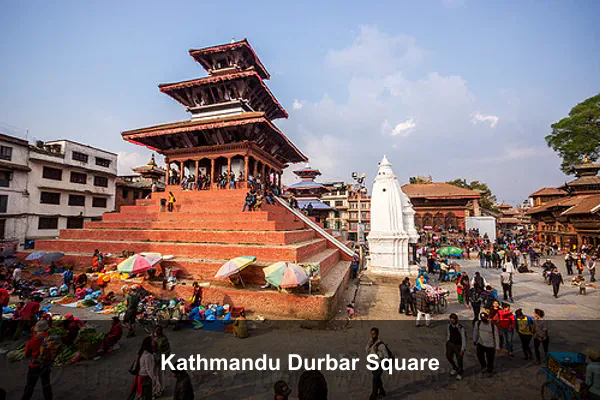
Kathmandu Durbar Square is the most atmospheric gateway into Nepal’s living Newar heritage, where former royal power still feels present in brick courtyards, tiered temples, carved balconies, and palace wings carefully restored after damage and decay.
Visitors can wander between palace courtyards, study intricate woodwork and stone guardians, watch daily worship around shrines, and notice how residents, priests, vendors, and heritage workers keep the old royal square active rather than frozen as a museum.
Best time to visit: October-November or March-April; visit on a weekday from 7:00-9:00 AM for quieter lanes or 4:00-6:00 PM for golden light.
Ticket price: Foreign visitors commonly pay NPR 1,000; SAARC rates are lower, Nepali citizens enter free, and fees should be checked at the ticket booth.
Boudhanath Stupa
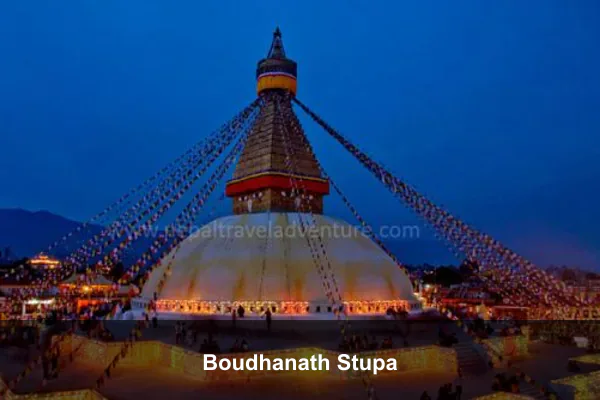
Boudhanath Stupa is one of Nepal’s most powerful spiritual landmarks, drawing visitors into a deeply Tibetan Buddhist atmosphere of prayer flags, chanting, incense, and watchful Buddha eyes. Its vast white dome and golden spire create a calm focal point amid Kathmandu’s movement, making it worth visiting for both cultural depth and quiet reflection.
Visitors can join pilgrims on a clockwise kora around the stupa, spin prayer wheels, step into surrounding monasteries, and pause at rooftop cafes overlooking the sacred circle. In the evening, butter lamps glow around the shrine as monks, locals, and travelers move together in a steady rhythm of devotion.
Best time to visit: October-December or March-May; dawn from 6:00-8:00 AM and dusk around 5:00-7:00 PM are the most atmospheric.
Ticket price: Foreign visitor entry is commonly NPR 400, SAARC visitors around NPR 100, and Nepali citizens usually enter free.
Bhaktapur Durbar Square
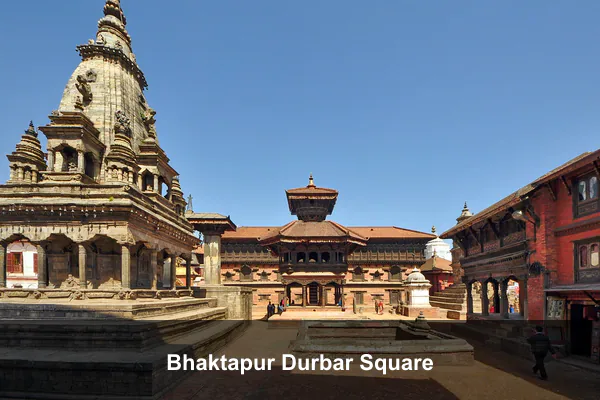
Bhaktapur Durbar Square offers one of Nepal’s most atmospheric medieval city experiences, where palace courtyards, tiered temples, brick lanes, and carved wooden windows still feel deeply lived in. Compared with busier heritage sites in the Kathmandu Valley, Bhaktapur rewards slow exploration with a stronger sense of continuity, craft, and old Newar urban life.
Visitors can wander between temple squares, pause at intricate woodcarvings, watch potters shaping clay in nearby courtyards, and follow quiet side streets lined with traditional houses and small shrines. Look closely at the doorways, roof struts, stone guardians, and everyday rituals, as much of Bhaktapur’s charm lies in its details rather than a single monument.
Best time to visit: October-November or March-April; arrive before 9:00 AM or stay after 4:00 PM to avoid day-trip crowds.
Ticket price: Foreign visitor tickets are commonly around USD 15 or NPR 1,500-1,800; SAARC/Chinese rates are lower and children under 10 are often free.
Pokhara's Phewa Lake and World Peace Pagoda
Pokhara is Nepal’s easiest place to slow down, with Phewa Lake stretching beneath the Annapurna range and the city settling into a calmer rhythm than Kathmandu. The lake is worth visiting for its mirror-like mountain views, relaxed Lakeside atmosphere, and easy access to the World Peace Pagoda above the southern shore.
Visitors can paddle or take a wooden boat across Phewa, watch Machhapuchhre and the Annapurnas shimmer on the water, then climb or drive partway toward the pagoda for a short viewpoint walk. From the white stupa, look back over the lake, clustered boats, forested hills, and snow peaks that make Pokhara Nepal’s classic lake-and-mountain base.
Best time to visit: October-November and March-April; go at sunrise for clear mountain reflections or late afternoon for the pagoda and lake views.
Ticket price: Lakeside and World Peace Pagoda are free; Phewa Lake boat prices vary, with short rides often starting around NPR 800 plus life jacket fees.
Annapurna Base Camp Trek
Annapurna Base Camp is one of Nepal’s classic multi-day Himalayan treks, loved for how quickly it brings walkers from forested foothills into a high mountain sanctuary. The route feels intimate rather than distant, with close-up views of Annapurna South, Hiunchuli, and the sacred-looking pyramid of Machhapuchhre rising above village trails.
Trekkers can follow stone steps through Gurung and Magar settlements, cross suspension bridges, sleep in simple teahouses, and watch rhododendron, bamboo, and alpine terrain change with each day’s climb. Near the lower trail, natural hot springs around Jhinu Danda offer a welcome soak after long descents.
Best time to visit: March-May for rhododendrons or October-November for the clearest skies; start hiking early each day around 6:30-7:30 AM.
Ticket price: Prices vary by guide, route, and package; foreign trekkers should budget at least NPR 3,000 for ACAP plus any TIMS/local/guide fees.
Sagarmatha National Park and Everest Base Camp Trail
Sagarmatha National Park is Nepal’s most iconic high-Himalayan journey, drawing travelers into the Everest region through Sherpa villages, pine forests, suspension bridges, and peaks that dominate the skyline. The trail to Everest Base Camp is worth visiting not only for its mountain scale, but for the gradual immersion into Khumbu culture, from lively Namche Bazaar to the spiritual setting of Tengboche Monastery.
Visitors can acclimatize in Namche, watch monks at Tengboche, cross moraine paths near glacial valleys, and notice how the landscape shifts from green hillsides to stark ice, rock, and snow. Reaching base camp is a demanding trek rather than a sightseeing stop, but the close views of glaciers, prayer flags, expedition camps, and surrounding giants make the effort memorable.
Best time to visit: Late March-May or late September-November; trek early in the day to reduce cloud cover and wind exposure at higher elevations.
Ticket price: Mandatory permit costs for foreign trekkers are usually around NPR 5,000-6,000 total, including Sagarmatha National Park and Khumbu municipality fees.
Chitwan National Park
Chitwan National Park gives Nepal a warm lowland counterpoint to its Himalayan landscapes, with sal forests, grasslands, and riverine wetlands sheltering one-horned rhinos, deer, crocodiles, and rich birdlife.
Visitors can join jeep safaris, track rhinos with expert naturalists, glide by canoe along quiet rivers, watch kingfishers and hornbills, and spend time in nearby Tharu villages to understand the culture shaped by this Terai wilderness.
Best time to visit: October-March for comfortable dry-season safaris, with February-April also good for wildlife near water sources; choose early morning or late afternoon drives.
Ticket price: Foreign park entry is NPR 2,000 per person per day; jeep safari, canoe, guide, and lodge package prices vary.
Lumbini Sacred Garden and Maya Devi Temple
Lumbini is one of Nepal’s most quietly powerful stops, revered as the birthplace of Siddhartha Gautama, the Buddha. Centered on the Maya Devi Temple and its sacred marker stone, the garden offers a calmer counterpoint to Nepal’s mountain drama, drawing pilgrims and travelers into a landscape shaped by devotion, silence, and memory.
Visitors can walk shaded paths between prayer flags, ancient ruins, ponds, and monasteries built by Buddhist communities from around the world. Pause near the Ashokan Pillar, watch monks circle the temple, and leave time for slow reflection along the monastic zones rather than treating Lumbini as a quick photo stop.
Best time to visit: October-March for cooler weather; visit at sunrise or late afternoon, with extra atmosphere around Buddha Jayanti if crowds are acceptable.
Ticket price: The Lumbini Development and Conservation Fee is NPR 1,000 per day for other foreign nationals; camera, video, and transport fees may be extra.
Bandipur Bazaar and Thani Mai Viewpoint
Bandipur Bazaar is worth visiting for its unhurried hill-town rhythm, where restored Newari houses, stone lanes, and mountain air make it a calm break between Kathmandu and Pokhara.
Visitors can stroll the traffic-light bazaar, notice carved wooden windows and old merchant homes, then climb to Thani Mai Viewpoint for wide Himalayan silhouettes over the surrounding ridges.
Best time to visit: October-November or March-April; climb Thani Mai before sunrise and wander the bazaar in the late afternoon.
Ticket price: Bandipur town has no general entry fee; small museums, caves, or local attractions may charge modest separate fees.
Rara Lake in Rara National Park
Rara Lake feels like Nepal at its most untouched: a high, remote sweep of blue water framed by forested ridges and far-western mountains. Its isolation is the appeal, rewarding travelers who accept longer journeys with rare quiet, shifting lake colors, and a sense of distance from the usual Himalayan routes.
Visitors can walk quiet lakeshore trails, look for changing reflections under different light, and climb toward Murma Top for the widest view over the lake and surrounding hills. Around the water, pine forests, birdlife, small settlements, and open alpine scenery make the experience feel slow, spacious, and deeply remote.
Best time to visit: March-May or October-November; walk the lakeshore in the morning and aim for Murma Top at sunrise or sunset in stable weather.
Ticket price: Foreign visitors pay about NPR 3,000 for Rara National Park entry; flights, jeeps, horses, camping, and boating prices vary widely.