
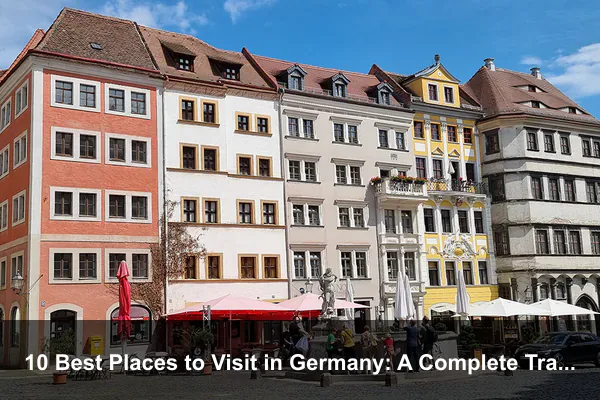
Germany rewards travelers who look beyond the standard first-time route. This plan focuses on distinctive, rail-friendly places with strong local character: UNESCO old towns, dramatic protected landscapes, wine villages, Baltic coast scenery, and industrial heritage.
The route stays entirely within Germany while avoiding the most repeated icons, making it useful for readers who want a fresh, practical guide. Each stop offers a clear reason to go, realistic access notes, and a local tip that helps turn a simple visit into a better-planned trip.
Bamberg Old Town and Rauchbier Taverns

Bamberg is a compact Upper Franconian city where medieval lanes, arched bridges, and riverside views make one of Germany’s most atmospheric easy walks. Visit the UNESCO-listed Old Town for the Altes Rathaus, Little Venice, cathedral quarter, and quiet cobbled streets, then settle into a traditional beer hall or terrace for the city’s famous Rauchbier. Try the smoky beer with a simple Franconian meal rather than as a quick tasting, since its bacon-like depth makes more sense beside hearty local food. April to October is best for walking and outdoor tables, and access is straightforward by train to Bamberg Hbf, a short hop from the historic center.
| Best for | Medieval lanes, beer halls, relaxed city walks |
|---|---|
| Location | Upper Franconia, Bavaria |
| Best time | April to October for terraces and walking |
| Access | Train to Bamberg Hbf; official info: https://en.bamberg.info/anreise/ |
Additional Info: Try Rauchbier with a simple Franconian meal rather than as a quick tasting, because the smoky flavor makes more sense with food.
Saxon Switzerland National Park and Bastei Bridge
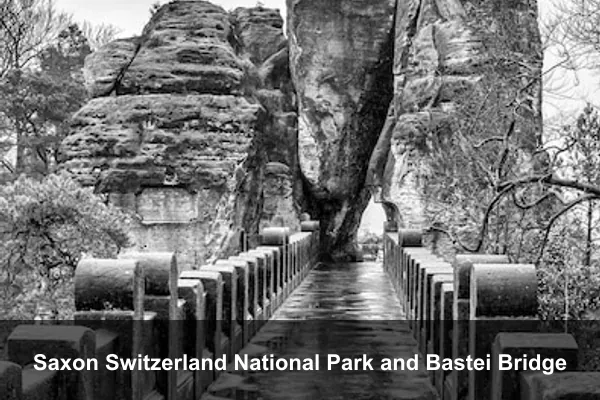
Saxon Switzerland National Park and Bastei Bridge bring one of Germany’s most dramatic hiking landscapes within easy reach of Dresden: sandstone towers, forest paths, cliff viewpoints, and sweeping Elbe River scenery. Set in Saxony southeast of Dresden, it is best for day hikes, viewpoints, and striking rock formations. Arrive early for the Bastei viewpoint before crowds build, then continue onto quieter trails around Rathen or toward Bad Schandau rather than treating the bridge as the only stop. Visit from May to October for safer trail conditions, and travel by S-Bahn to Rathen or Bad Schandau; check access details at https://www.saechsische-schweiz.de/en/.
| Best for | Day hikes, viewpoints, dramatic rock formations |
|---|---|
| Location | Saxony, southeast of Dresden |
| Best time | May to October for safer trails |
| Access | S-Bahn to Rathen or Bad Schandau; details: https://www.saechsische-schweiz.de/en/ |
Additional Info: Arrive early for the Bastei viewpoint, then continue onto quieter trails instead of treating the bridge as the only stop.
Lübeck Old Town and Travemünde Waterfront
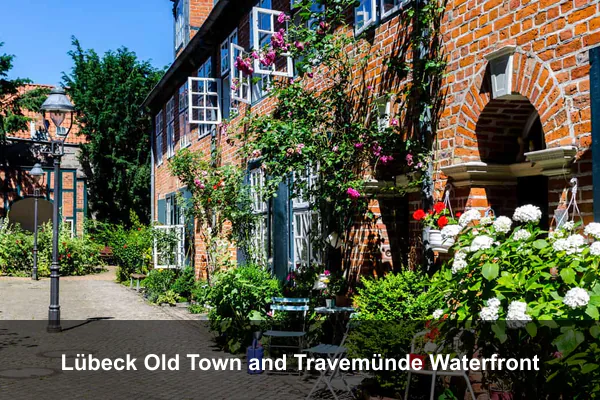
Lübeck is one of Germany’s most atmospheric city breaks, with a UNESCO-listed Old Town of brick Gothic churches, merchants’ houses, the Holstentor gate, and cafes serving its famous marzipan. Set in Schleswig-Holstein near the Baltic coast, it works especially well from May to September, when you can pair slow walks through medieval lanes with a half-day trip to Travemünde for the beach, harbor promenade, and Baltic breezes. Arrive by train at Lübeck Hbf, then explore mostly on foot; use Travemünde as an easy coastal add-on rather than a separate overnight stop unless you want a slower seaside stay. For access details, see official travel information.
| Best for | Architecture, marzipan, Baltic breezes |
|---|---|
| Location | Schleswig-Holstein, near the Baltic coast |
| Best time | May to September for Old Town and coast |
| Access | Train to Lübeck Hbf; travel info: https://www.visit-luebeck.com/service/travelling-parking |
Additional Info: Use Travemünde as a half-day extension, not a separate overnight stop, unless you want a slower seaside stay.
Jasmund National Park and Königsstuhl on Rügen
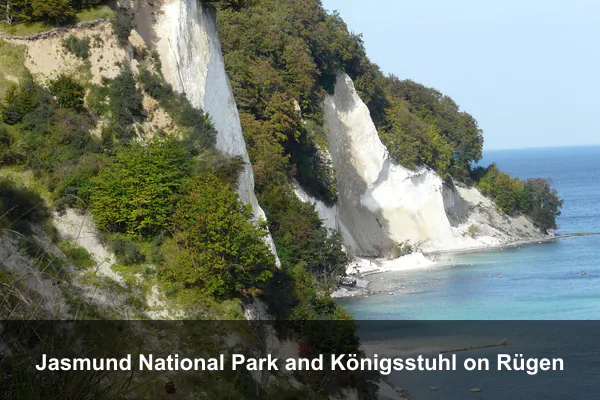
Jasmund National Park on Rügen Island in Mecklenburg-Vorpommern is one of Germany’s most dramatic nature stops, where white chalk cliffs, old beech forest, and Baltic Sea viewpoints make it ideal for coastal walks, nature photography, and wide sea views. Visit the Königsstuhl area for the classic cliff scenery, then follow marked trails through the national park for quieter forest-and-coast perspectives. May to September brings the easiest weather, while autumn is better for calmer paths. Do not plan to drive directly to Königsstuhl; use Sassnitz or the Hagen car park, then continue by shuttle or walking routes in line with conservation rules. Visitor details are available at https://www.koenigsstuhl.com/en/.
| Best for | Coastal walks, nature photography, sea views |
|---|---|
| Location | Rügen Island, Mecklenburg-Vorpommern |
| Best time | May to September, or autumn for quieter trails |
| Access | Use Sassnitz or Hagen car park; visitor info: https://www.koenigsstuhl.com/en/ |
Additional Info: Do not plan to drive directly to Königsstuhl, because the final approach is managed by shuttle, walking routes, and conservation rules.
Görlitz Old Town and Neisse River Walk
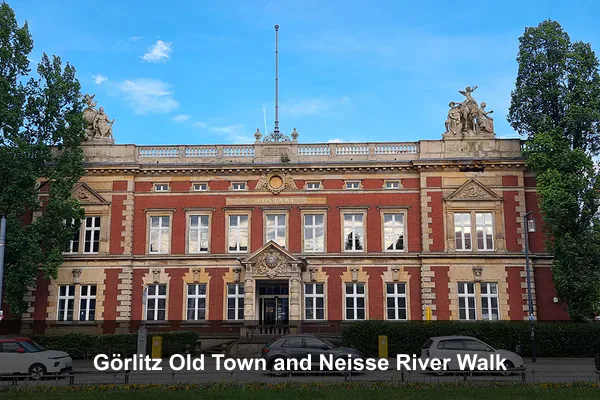
Görlitz rewards slow wandering with one of Germany’s best-preserved old towns, where Gothic, Renaissance, Baroque, and Art Nouveau facades make every lane feel camera-ready. Set in Saxony on the Polish border, it is ideal for architecture lovers, photographers, and travelers who prefer quiet streets to big-city crowds; film fans may also recognize corners used as period locations. Visit from April to October for the easiest outdoor sightseeing, arrive by train to Görlitz, and use https://www.visit-goerlitz.com/ for current visitor details. Build in time to follow the Neisse River and cross the pedestrian bridge to Zgorzelec, where the view back toward Görlitz adds a memorable cross-border perspective.
| Best for | Architecture, photography, quiet city wandering |
|---|---|
| Location | Saxony, on the Polish border |
| Best time | April to October for outdoor sightseeing |
| Access | Train to Görlitz; tourist info: https://www.visit-goerlitz.com/ |
Additional Info: Build in time to walk across the pedestrian bridge to Zgorzelec for a different view back toward Görlitz.
German Wadden Sea Mudflat Walk
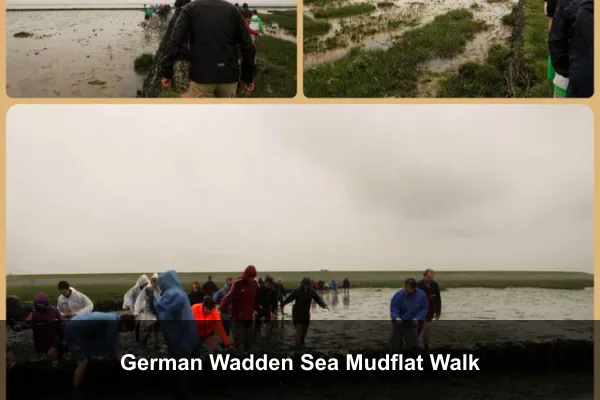
A German Wadden Sea mudflat walk is one of Germany’s most unusual nature experiences, crossing a UNESCO-listed North Sea landscape of rippled sand, tidal channels, seabirds, wind, and wide horizons. Best for wildlife lovers and guided nature trips, it is usually done from bases such as Cuxhaven, Büsum, Husum, or Sylt along the coasts of Lower Saxony and Schleswig-Holstein. Go from May to September with a certified guide, who can explain the fragile ecosystem and keep the route safe. Never walk the mudflats independently, as tides, fog, and hidden channels can become dangerous quickly.
| Best for | Wildlife, unusual landscapes, guided nature trips |
|---|---|
| Location | North Sea coast of Lower Saxony and Schleswig-Holstein |
| Best time | May to September with a certified guide |
| Access | Base in Cuxhaven, Büsum, Husum, or Sylt; overview: https://www.waddensea-worldheritage.org/ |
Additional Info: Never walk the mudflats independently, because tide, fog, and channels can become dangerous quickly.
Quedlinburg Old Town and Castle Hill
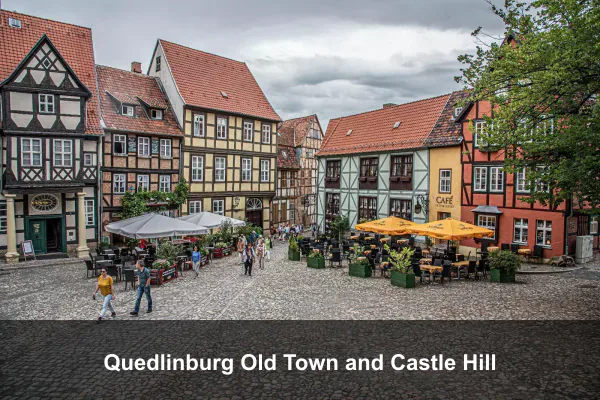
Quedlinburg rewards slow wandering, with more than a thousand years of history folded into half-timbered lanes, quiet courtyards, and the climb up Castle Hill to its Romanesque heritage. Set in Saxony-Anhalt on the northern edge of the Harz, it is best for travelers who want historic streets and a small-town stay rather than a big-city checklist. Visit from April to June for mild days, or September to December for autumn color and festive atmosphere. Arrive by regional train to Quedlinburg and use https://www.quedlinburg-info.de/en/ for local details; if time allows, stay overnight, when the lanes around Castle Hill grow much calmer after day visitors leave.
| Best for | Half-timbered streets, history, small-town stays |
|---|---|
| Location | Saxony-Anhalt, northern Harz region |
| Best time | April to June or September to December |
| Access | Regional train to Quedlinburg; official info: https://www.quedlinburg-info.de/en/ |
Additional Info: Stay overnight if possible, because the lanes around Castle Hill are much calmer after day visitors leave.
Cochem and the Moselle Wine Valley

Cochem is one of Germany’s most rewarding river-and-vineyard stops, set in Rhineland-Palatinate where the Moselle curves below Reichsburg Cochem and steep Riesling slopes. Visit the hilltop castle, wander the old town, then continue by local train or boat to wine villages so tastings do not depend on driving. May to October is the best window, with harvest season adding extra atmosphere across the valley. Arrive by train to Cochem, and check Reichsburg Cochem visiting details before planning your castle visit.
| Best for | Wine, castles, river views |
|---|---|
| Location | Rhineland-Palatinate, Moselle Valley |
| Best time | May to October, especially harvest season |
| Access | Train to Cochem; castle info: https://reichsburg-cochem.de/plan-your-visit/?lang=en |
Additional Info: Use local trains or boats between villages so wine tasting does not depend on driving.
Zollverein Coal Mine Industrial Complex

Zollverein Coal Mine Industrial Complex in Essen turns the Ruhr’s industrial past into one of Germany’s most distinctive cultural stops, with striking Bauhaus-influenced architecture, museums, design spaces, and atmospheric walking routes for photography. Start at the Ruhr Visitor Center in the former Coal Washery to understand the vast scale of the site before exploring exhibitions, former mining buildings, and outdoor paths. It works well year-round, especially because indoor options make it a reliable choice in bad weather. For easy access, take tram 107 to Zollverein and check current visit details at https://www.zollverein.de/.
| Best for | Industrial heritage, museums, design and photography |
|---|---|
| Location | Essen, North Rhine-Westphalia |
| Best time | Year-round, with indoor options in bad weather |
| Access | Tram 107 to Zollverein; visit details: https://www.zollverein.de/ |
Additional Info: Start at the Ruhr Visitor Center in the former Coal Washery so the scale of the site makes sense before you explore.
Spreewald Biosphere Reserve Canoe Routes
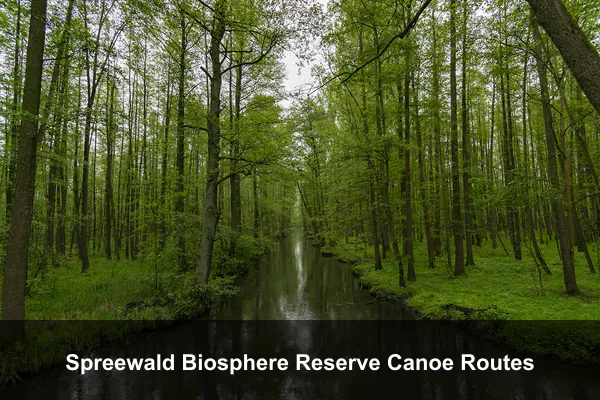
Spreewald Biosphere Reserve is Germany at its slowest and greenest: a maze of quiet canals, alder forest, and Sorbian villages southeast of Berlin. Base yourself around Lübbenau or Lübben to canoe between wooden footbridges, cycle flat waterside paths, or join a traditional punt trip through the waterways. From May to September, paddling is at its best, but summer weekends are busy, so reserve a canoe or punt in advance. Make time for Lehde, where you can taste the region’s famous pickles and visit a small cultural museum before returning by regional train to Berlin.
| Best for | Canoeing, cycling, nature, local food |
|---|---|
| Location | Brandenburg, around Lübbenau and Lübben |
| Best time | May to September for paddling |
| Access | Regional train from Berlin to Lübbenau or Lübben; info: https://www.spreewald.de/en/ |
Additional Info: Reserve a canoe or punt trip on summer weekends, then stop in Lehde for pickles and a short cultural museum visit.
Tips Before You Go
Plan this Germany route around rail hubs rather than rental-car loops: Dresden works for Saxon Switzerland, Hamburg or Lübeck for the north, Essen for the Ruhr, Berlin for Spreewald, and Koblenz or Trier for the Moselle. Check regional transport tickets, ferry times, and seasonal shuttles before locking in hotels.
Pack for mixed weather, carry some cash for smaller towns and taverns, and book guided experiences early where nature conditions matter, especially mudflat walks and summer paddling. Many museums and restaurants reduce hours on Mondays or Sundays, so confirm opening times before each travel day.
