
Panama rewards travelers who look beyond a quick canal stop. This guide frames the country as a compact crossroads of engineering, colonial history, Indigenous culture, cloud forests, Caribbean islands and Pacific marine life.
The plan below avoids a generic tropical checklist and focuses on places that show Panama’s own identity: the canal corridor, Guna-led island tourism, Chiriqui highlands, UNESCO heritage towns, rainforest day trips and remote protected waters.
Panama Canal at Miraflores Visitor Center
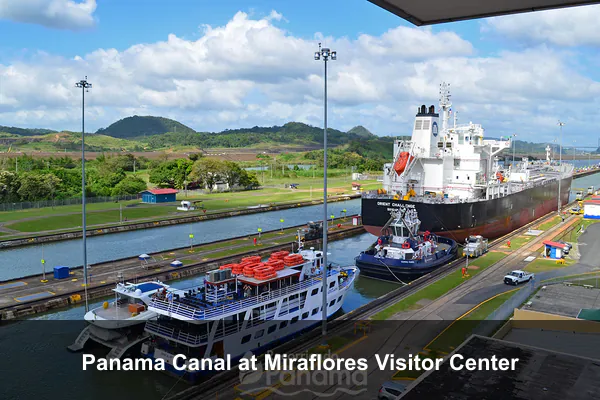
The Panama Canal at Miraflores Visitor Center is the easiest way to grasp Panama’s global importance in a single, high-impact stop. Just 15-25 minutes by taxi or rideshare from Panama City, it is ideal for first-time visitors, short stays, and anyone curious about world-changing engineering. Visit the observation decks to watch massive ships rise or descend through the locks, then explore the exhibits for context on the canal’s history and operation. It is worth visiting year-round, but check ship schedules before you go and arrive near a transit window so the views feel worth the ticket.
| Best for | Engineering, first-time visitors, short stays |
|---|---|
| Location | Miraflores, near Panama City |
| Best time | Year-round; check ship schedules |
| Access | About 15-25 minutes by taxi or rideshare |
Additional Info: Arrive near a scheduled transit window so the observation decks feel worth the ticket.
Casco Antiguo, Panama City
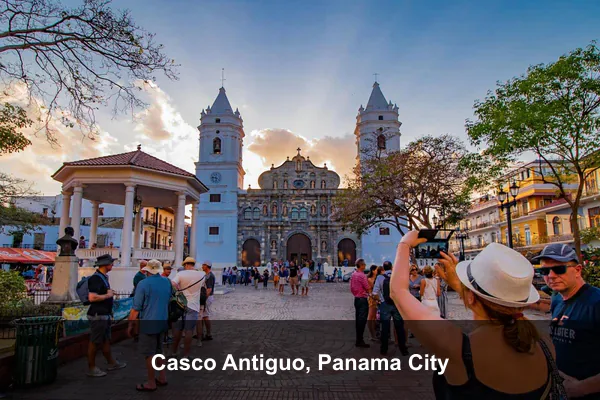
Casco Antiguo is Panama City’s atmospheric historic core, where restored colonial facades, church plazas, rooftop bars and chef-led restaurants make it the best stop for connecting architecture, food and nightlife. Set in San Felipe, it rewards a late-afternoon arrival: take a taxi or rideshare to the edge of the district, then explore on foot as the heat softens and the streets come alive. Before dinner, walk the waterfront ramparts for easy skyline and bay views without booking a separate tour, then settle into a boutique hotel terrace, cocktail bar or intimate dining room for the evening.
| Best for | History, dining, boutique hotels |
|---|---|
| Location | San Felipe, Panama City |
| Best time | Late afternoon into evening |
| Access | Taxi or rideshare, then explore on foot |
Additional Info: Walk the waterfront ramparts before dinner for skyline and bay views without adding a separate tour.
Guna Yala Islands
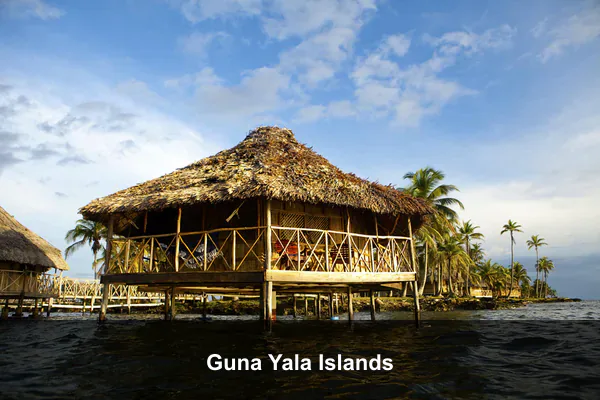
Scattered along Panama’s Caribbean coast in the Guna Yala comarca, the Guna Yala Islands are best for travelers seeking rustic islands, living culture and clear water rather than polished resort travel. Visits are organized through Guna communities, with simple cabins, local boatmen and island hosts shaping days around swimming, snorkeling over bright reefs, beach-hopping and learning about Guna traditions at a respectful pace. The clearest and easiest travel window is December to April, when roads and sea crossings are generally smoother. Most visitors go by 4×4 from Panama City to Carti, then continue by local boat transfer, so pack light, bring cash and keep plans flexible because card payments, internet access and exact schedules are limited.
| Best for | Rustic islands, culture, clear water |
|---|---|
| Location | Caribbean coast, Guna Yala comarca |
| Best time | December-April for easier road and sea travel |
| Access | 4×4 to Carti, then local boat transfer |
Additional Info: Bring cash, light luggage and patience because card payment and internet access are limited.
Bocas del Toro and Isla Bastimentos
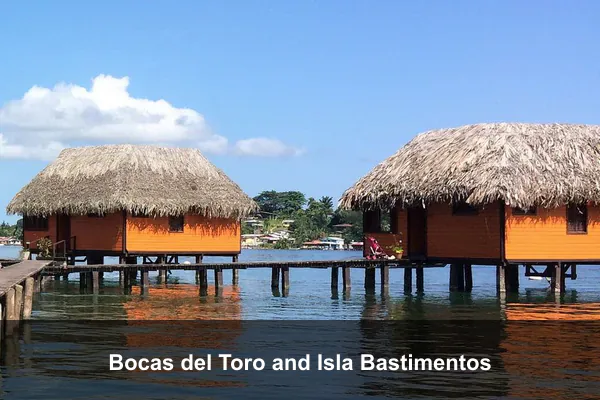
In Bocas del Toro Province, Bocas del Toro and Isla Bastimentos make Panama’s easygoing Caribbean base, where days revolve around island-hopping, snorkeling over reefs, beach time at Red Frog or Wizard, and plates of Afro-Caribbean seafood between casual nights in Bocas Town. Visit in February-March or September-October for some of the best conditions. Access is straightforward: fly to Bocas or travel by bus to Almirante, then continue by boat. Use water taxis in daylight when possible, and keep a dry bag ready for splashy transfers.
| Best for | Island-hopping, snorkeling, casual nightlife |
|---|---|
| Location | Bocas del Toro Province |
| Best time | February-March or September-October |
| Access | Fly to Bocas or bus to Almirante plus boat |
Additional Info: Use water taxis in daylight when possible and keep a dry bag ready for boat transfers.
Boquete and Volcan Baru National Park
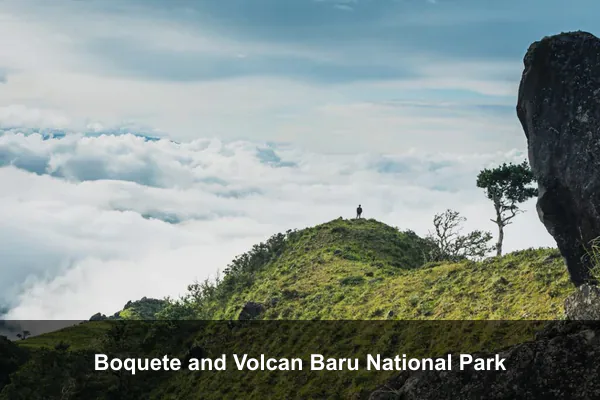
Boquete and Volcan Baru National Park reveal Panama’s cooler mountain side in the Chiriqui Highlands of western Panama, where misty coffee farms, cloud forest trails, waterfalls and fresh highland air make a rewarding escape from the coast. Visit local fincas for tastings, hike through lush forest, or tackle Volcan Baru for sunrise views that can stretch to both oceans on clear mornings. The best conditions are usually December to April, when trails are firmer. To get there, fly or take a bus to David, then continue by shuttle to Boquete; for the Volcan Baru sunrise, book a guide or 4×4 and pack warm layers.
| Best for | Coffee, hiking, cool-weather escapes |
|---|---|
| Location | Chiriqui Highlands, western Panama |
| Best time | December-April for firmer trails |
| Access | Fly or bus to David, then shuttle to Boquete |
Additional Info: For Volcan Baru sunrise, book a guide or 4×4 and pack warm layers.
Coiba National Park from Santa Catalina
Coiba National Park, reached by licensed boat tours from Santa Catalina in Veraguas, is Panama’s premier marine wilderness for divers, snorkelers, and wildlife lovers. Set in the Gulf of Chiriqui, its protected islands and reefs offer clear Pacific water, sharks, rays, turtles, reef fish, and wild beaches that feel far from the mainland. December to April usually brings calmer crossings and better boat conditions, making it the most practical season to plan a day trip or dive outing. Before departure, confirm park permits, tour licensing, and current marine conditions with your operator.
| Best for | Diving, snorkeling, marine wildlife |
|---|---|
| Location | Gulf of Chiriqui, Veraguas |
| Best time | December-April for calmer crossings |
| Access | Licensed boat tours from Santa Catalina |
Additional Info: Confirm park permits and marine conditions with your operator before the boat day.
El Valle de Anton
Set in a cool volcanic valley in Cocle Province west of Panama City, El Valle de Anton makes an easy soft-adventure break between urban sightseeing and Panama’s wilder nature routes. Come for waterfall walks, gentle hikes to viewpoints, and the weekend market, where local crafts and produce give the town an easygoing mountain feel. It is about 2-3 hours by car or bus, so it works as a long day trip or a relaxed overnight stop. Plan outdoor time for dry-season mornings and start hikes early, as clouds and showers often build later in the day.
| Best for | Waterfalls, easy hikes, weekend markets |
|---|---|
| Location | Cocle Province, west of Panama City |
| Best time | Dry-season mornings |
| Access | About 2-3 hours by car or bus |
Additional Info: Start hikes early because clouds and showers often build later in the day.
Portobelo and San Lorenzo Fortifications
On Panama’s Caribbean side in Colon Province, Portobelo and the San Lorenzo Fortifications reveal how Spanish treasure fleets once linked the isthmus to global colonial trade. Visit for UNESCO-listed stone ramparts, sea-facing ruins, jungle-edged views, and Afro-Panamanian culture that still shapes the towns, music, festivals, and food. The area works well as a day trip by car from Panama City, but it is worth slowing down: pair Portobelo’s forts and waterfront church with a local seafood lunch instead of treating it as a quick photo stop. Go on weekdays outside holiday crowds for a calmer look at the coast, easier parking, and more time to take in the history and Caribbean scenery.
| Best for | UNESCO history, coastal scenery, culture |
|---|---|
| Location | Colon Province, Caribbean side |
| Best time | Weekdays outside holiday crowds |
| Access | Day trip by car from Panama City |
Additional Info: Combine Portobelo's forts with a local seafood lunch rather than rushing it as a photo stop.
Pearl Islands: Contadora and Saboga
The Pearl Islands, especially Contadora and quieter Saboga, offer one of Panama City’s easiest Pacific island escapes, with pale beaches, clear coves, and relaxed boating in the Gulf of Panama. Visit from December to April for sunny beach breaks, or July to October when humpback whales pass through Las Perlas. Ferries and short flights connect the islands with Panama City, making an overnight stay simple, but check ferry times before planning a day trip because return options can limit your time on the sand.
| Best for | Beach breaks, boating, whale season |
|---|---|
| Location | Gulf of Panama |
| Best time | December-April; July-October for whales |
| Access | Ferry or short flight from Panama City |
Additional Info: Check ferry times before planning a day trip because return options can limit beach time.
Soberania National Park and Pipeline Road
Soberania National Park and Pipeline Road offer Panama’s easiest close-to-the-city rainforest escape, just 30-45 minutes from Panama City in the Canal Zone near Gamboa. Go early in the morning year-round for the best chance of seeing toucans, motmots, monkeys, sloths, and other wildlife before the forest heats up. The mostly gentle trails make it rewarding for birdwatchers, rainforest walkers, and families, but a local birding guide is especially worthwhile here, since many species are located by call long before they appear in the canopy.
| Best for | Birdwatching, rainforest walks, families |
|---|---|
| Location | Canal Zone near Gamboa |
| Best time | Early morning year-round |
| Access | About 30-45 minutes from Panama City |
Additional Info: A birding guide is worth it here because many species are found by sound before sight.
Tips Before You Go
Panama is compact, but logistics vary sharply by region: city sights are easy by taxi, while Guna Yala, Coiba and island routes require cash, early starts, boats, permits or local operators. Dry season from December to April is the simplest overall window, but whale watching, surf and Caribbean conditions follow their own calendars.
Before booking remote areas, check current guidance from Tourism Panama, Coiba National Park and your government’s Panama travel advisory. Respect Indigenous community rules, use licensed guides in protected areas and avoid trying to cover both coasts too quickly.