
Ecuador is compact enough for one trip to combine Andean volcanoes, Amazon waterways, cloud forest trails, Pacific islands, and high-altitude national parks without losing days to long transfers. This plan focuses on outdoor adventure experiences that are specific to Ecuador rather than a general country sightseeing list.
Use these recommendations to shape a route around hiking, rafting, wildlife watching, biking, snorkeling, and guided wilderness travel. Altitude, weather, and conservation rules matter here, so each stop includes practical timing, cost, and visitor tips.
Cotopaxi National Park
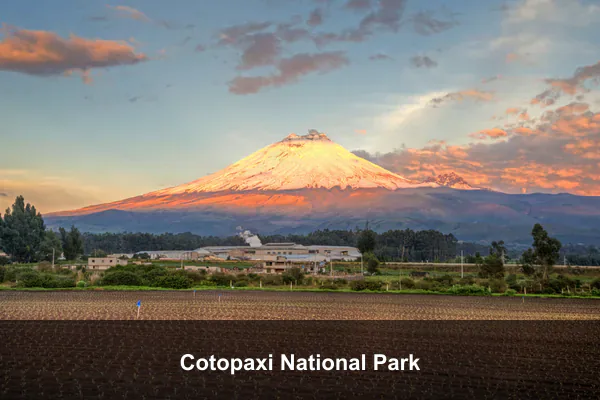
Cotopaxi National Park is one of Ecuador’s most striking outdoor playgrounds, anchored by the near-perfect cone of Cotopaxi Volcano rising above wide-open páramo grasslands. The dramatic high-altitude scenery, glacier-capped summit, and roaming herds of wild horses make it a bucket-list stop for hikers, cyclists, and anyone chasing raw Andean landscapes within easy reach of Quito.
Visitors can hike up to the José Rivas Refuge at around 4,800 meters, mountain bike down the long volcanic slopes, or paddle on the mirror-like Limpiopungo Lagoon with the peak reflected in the water. Keep an eye out for Andean condors, deer, and wild rabbits, and pause at the interpretation center to learn how past eruptions shaped the surrounding valleys.
Travel tip: Spend at least one night in Quito or the highlands before visiting, because the park sits at serious altitude and the refuge hike can feel demanding.
Best time to visit: June to September or December to January; arrive between 8:00 AM and 10:00 AM for clearer volcano views.
Ticket price: Park entry is usually low-cost or free depending on current rules; guided hikes, biking tours, and summit climbs vary by operator.
Quilotoa Crater Lake and the Quilotoa Loop
Quilotoa Crater Lake is one of Ecuador’s most striking natural wonders, a turquoise caldera lake cradled inside an extinct volcano high in the Andes. The surrounding Quilotoa Loop links remote Indigenous villages through canyon trails and ridgelines, offering a rare chance to combine dramatic high-altitude scenery with authentic encounters in Kichwa communities that few mass-tourism routes reach.
Trekkers can spend several days walking between hamlets like Sigchos, Isinliví, and Chugchilán, descending into deep river canyons and climbing past patchwork farmland before reaching the crater rim itself. At the lake, visitors can hike down to the shore, paddle a rented kayak on the mineral-rich water, or hire a mule for the steep return climb, all while watching shifting light transform the crater’s color throughout the day.
Travel tip: Carry cash, layers, rain protection, and offline maps, as village services are limited and weather can change quickly.
Best time to visit: June to September for drier trekking conditions; start hiking early in the morning to avoid afternoon clouds and wind.
Ticket price: Viewing the crater is generally free or low-cost; lodging, local transport, and mule rides are paid separately and prices vary.
Baños Waterfall Route and Canyoning
Baños de Agua Santa sits dramatically on the eastern slopes of the Andes where the highlands tumble into the Amazon basin, making it Ecuador’s undisputed capital of adrenaline. The town’s compact center is ringed by thundering waterfalls, steep green canyons, and the Pastaza River gorge, giving every activity a backdrop that feels almost cinematic and keeping travelers based here for days rather than hours.
Visitors can pedal the famous Ruta de las Cascadas past Agoyán, Manto de la Novia, and the powerful Pailón del Diablo, then swap the saddle for a harness on canyoning descents down moss-covered cliffs. Thrill seekers leap from the San Francisco bridge swing or ride the Casa del Árbol swing at the edge of the world, while quieter moments come from steaming thermal baths and misty footbridges over the roaring river below.
Travel tip: Rent a bike in town for the waterfall route, then return by truck or bus if you do not want to ride the uphill stretch back.
Best time to visit: June to September and December to February; start cycling before 9:00 AM to beat traffic and tour groups.
Ticket price: Bike rentals are usually inexpensive; waterfall viewpoints and canyoning tours have separate fees, with adventure tour prices varying by operator.
Cuyabeno Wildlife Reserve
Cuyabeno Wildlife Reserve protects more than half a million hectares of flooded rainforest in Ecuador’s northeastern Amazon, where blackwater rivers and lagoons replace roads as the main way to move through the jungle. Its remoteness keeps crowds thin and biodiversity exceptionally rich, making it one of the most rewarding places in the country to experience the Amazon on the water rather than from a trail.
Travelers glide by motorized canoe through the Laguna Grande system, spotting pink river dolphins, monkeys, caimans, anacondas, and hundreds of bird species alongside expert naturalist guides. Days are built around dawn paddles, swims in the lagoon, visits to Siona and Kichwa communities, and night walks that reveal tarantulas, tree frogs, and glowing insect eyes just beyond the lodge boardwalks.
Travel tip: Book with a licensed lodge that includes transport from Lago Agrio, and bring a dry bag, insect repellent, and lightweight long sleeves.
Best time to visit: March to November for higher water levels and easier canoe access; wildlife outings are best at dawn, dusk, and after dark.
Ticket price: Reserve access is typically included in lodge packages; multi-day guided trips vary widely by lodge level and season.
Mindo Cloud Forest
Tucked into the misty western slopes of the Andes about two hours from Quito, Mindo is a compact cloud forest town that punches far above its size for outdoor thrills. Its tangled canopy, rushing rivers, and ridge-top trails sit inside one of the most biodiverse pockets on the planet, making it an easy escape where adrenaline activities and serious wildlife watching share the same afternoon.
Visitors can soar across the valley on long zip-line circuits, ride the tarabita cable car to a cluster of waterfalls linked by jungle trails, or float the Mindo River on inflatable tubes through gentle rapids. Birders scan the feeders for toucans, motmots, and dozens of hummingbird species, while butterfly farms, chocolate workshops, and orchid gardens add slower-paced discoveries between the bigger adventures.
Travel tip: Wear shoes with grip for muddy waterfall trails and bring a light rain jacket even in the dry season.
Best time to visit: June to September for somewhat drier trails; early morning is best for birdwatching and cooler hikes.
Ticket price: Town entry is free; zip-lines, waterfall cable cars, tubing, and reserves charge separate fees that vary by activity.
Cajas National Park
Cajas National Park rises just west of Cuenca and offers one of Ecuador’s most striking highland landscapes, where more than two hundred glacial lakes are scattered across windswept paramo above 3,800 meters. Its raw, treeless terrain feels closer to the Scottish Highlands than the equator, giving adventurous hikers a rare chance to experience true high-altitude wilderness within easy reach of a major city.
Visitors can follow well-marked routes like the Toreadora and Llaviuco trails, spotting llamas, hummingbirds, and the gnarled polylepis forests that survive at this elevation. The thin air makes even moderate walks demanding, but the payoff is constant: mirror-still lakes, drifting mist, and sweeping ridgelines that reveal the dramatic scale of the Andes.
Travel tip: Register at the visitor point when required, dress for cold wind, and avoid hiking alone in fog because trails can become difficult to follow.
Best time to visit: June to September for clearer conditions; begin between 7:00 AM and 9:00 AM before afternoon weather builds.
Ticket price: Entry is commonly free, though guided hikes and private transport from Cuenca cost extra.
Chimborazo Wildlife Reserve
Chimborazo Wildlife Reserve surrounds Ecuador’s tallest volcano and delivers a raw, high-altitude landscape unlike anywhere else in the country. The thin air, golden paramo grasslands, and snow-streaked summit create a dramatic backdrop that rewards adventurous travelers with solitude, sweeping Andean views, and a genuine sense of remoteness within easy reach of Riobamba.
Visitors can hike between the Carrel and Whymper refuges for a taste of serious altitude, spot herds of vicunas grazing across the plateau, and join thrilling downhill mountain biking descents that drop thousands of meters toward the valleys below. Photographers will appreciate the shifting light on the glacier, while mountaineers use the reserve as a launch point for guided summit attempts on Chimborazo itself.
Travel tip: Do not underestimate the altitude; move slowly, bring gloves and windproof layers, and consider a guide for biking or summit-related routes.
Best time to visit: June to September and December to January; mornings offer the best chance of clear views and calmer winds.
Ticket price: Reserve entry is usually low-cost or free depending on current rules; guided biking and mountaineering services vary by operator.
Kicker Rock, San Cristobal Island
Kicker Rock, known locally as León Dormido, rises sharply from the Pacific just off San Cristobal Island and ranks among the Galapagos’ most iconic marine sites. The split between its two towering tuff cones forms a narrow channel where strong currents attract an extraordinary concentration of pelagic life, making it a bucket-list stop for snorkelers and divers seeking close encounters in clear, open water.
Visitors drift through the channel alongside hammerhead and Galapagos sharks, eagle rays, sea turtles, and playful sea lions, while tropical fish swirl around the volcanic walls below. Above the surface, frigatebirds, blue-footed boobies, and Nazca boobies nest on the cliffs, and the day trip from Puerto Baquerizo Moreno typically pairs the underwater experience with a stop at a nearby beach for a relaxed swim.
Travel tip: Book with an authorized operator in advance and bring motion-sickness medication if you are sensitive to boat crossings.
Best time to visit: December to May for warmer seas and calmer surface conditions; June to November can bring richer marine activity but cooler water.
Ticket price: Galapagos conservation and transit fees apply; snorkeling or diving tours to Kicker Rock are additional and prices vary.
Jatunyacu River near Tena
The Jatunyacu River near Tena is one of Ecuador’s most rewarding whitewater runs, prized for its warm jungle water, steady Class III rapids, and dramatic Amazonian setting. Its accessibility from Quito and reliable year-round flows make it a favorite for first-time rafters and seasoned paddlers seeking rainforest immersion without technical extremes.
Visitors paddle through roughly 25 kilometers of continuous rapids framed by dense canopy, cascading side streams, and Kichwa community lands, with calm pools perfect for swimming between bigger waves. Watch for kingfishers, toucans, and butterflies along the banks, and enjoy a riverside lunch stop that lets you appreciate the surrounding Napo Province jungle up close.
Travel tip: Choose a reputable rafting company that provides helmets, life jackets, safety kayakers, and a clear river-level briefing.
Best time to visit: September to February often brings exciting but manageable flows; morning departures are most common for full-day rafting trips.
Ticket price: No standard river entry fee; guided rafting trips usually price per person and vary by season and inclusions.
El Altar and Collanes Valley Trek
The El Altar and Collanes Valley trek leads into one of Sangay National Park’s most spectacular corners, where a collapsed volcanic caldera cradles the turquoise Laguna Amarilla beneath jagged, glacier-streaked peaks. The route stays well off Ecuador’s standard tourist circuit, rewarding committed hikers with raw paramo landscapes, drifting clouds, and a sense of solitude that is increasingly hard to find in the Andes.
Trekkers cross the wide, marshy Collanes Valley on foot or horseback from the trailhead near Candelaria, watching for wild horses, Andean condors, and shifting weather that can transform the scenery within minutes. A steep final climb up the crater rim opens onto the sulfur-tinted Laguna Amarilla, framed by El Altar’s nine ragged summits, while basic refuges and camping spots in the valley make it possible to linger for sunrise reflections.
Travel tip: Go with a local guide if conditions are wet or visibility is poor, and pack waterproof boots because the approach can be extremely muddy.
Best time to visit: June to September for the driest trekking window; start before sunrise if attempting a long day hike to Laguna Amarilla.
Ticket price: Park access is often free or low-cost, but guides, horse support, camping, and transport from Riobamba or Penipe vary by provider.
