
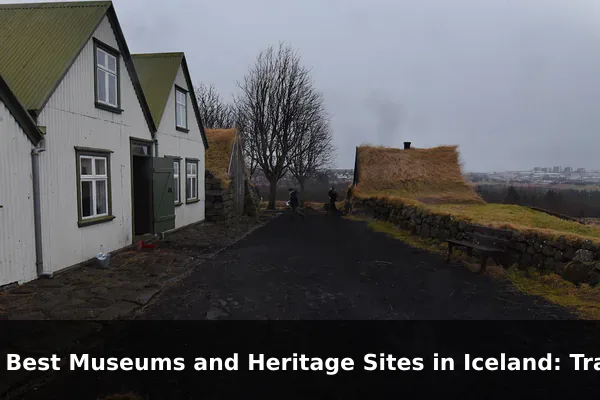
Iceland is often planned around waterfalls, glaciers, and volcanic landscapes, but its museums and heritage sites add the human story behind those dramatic places. This article should take a culture-first angle, focusing on archaeology, turf architecture, maritime work, saga storytelling, settlement history, and the way Icelanders adapted to isolation, weather, and changing economies.
The plan below avoids a general “best places in Iceland” route and instead builds a practical museum-and-heritage itinerary across Reykjavík, the south coast, West Iceland, North Iceland, and the Westman Islands. Prices and opening times should be treated as planning guidance, with readers encouraged to confirm official details before traveling, especially outside summer.
National Museum of Iceland, Reykjavík
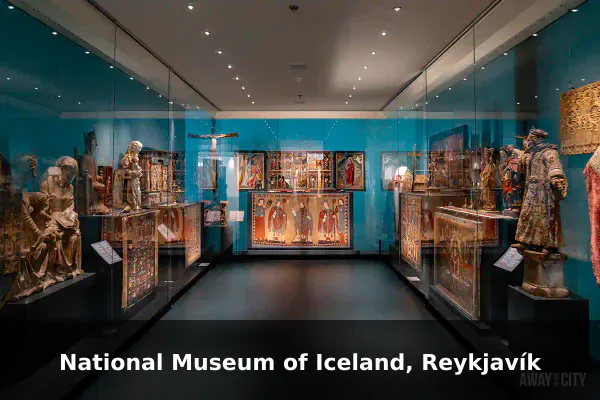
The National Museum of Iceland offers the clearest single overview of the country’s story, tracing more than a thousand years from the Viking settlement era through the long centuries under Norwegian and Danish rule to modern independence. For first-time visitors, it provides the historical backbone that makes every later stop on the trip, from turf farms to coastal heritage sites, easier to interpret.
Inside, the permanent exhibition Making of a Nation guides visitors chronologically through around 2,000 objects, including the famous Valþjófsstaður church door, medieval religious carvings, everyday tools, and twentieth-century items reflecting the move toward republic and modernity. Temporary photography and design exhibitions on the upper floors usually complement the main route and reward a slower second loop.
Travel tip: Arrive by city bus or walk from central Reykjavík, and use the lockers downstairs if you are carrying day-trip bags.
Best time to visit: Year-round, ideally 10:00-12:00 before afternoon visitors; current listed hours are generally 10:00-17:00.
Ticket price: Adults are listed at about ISK 3,300; students and seniors about ISK 1,600; children under 18 are free.
The Settlement Exhibition, Reykjavík
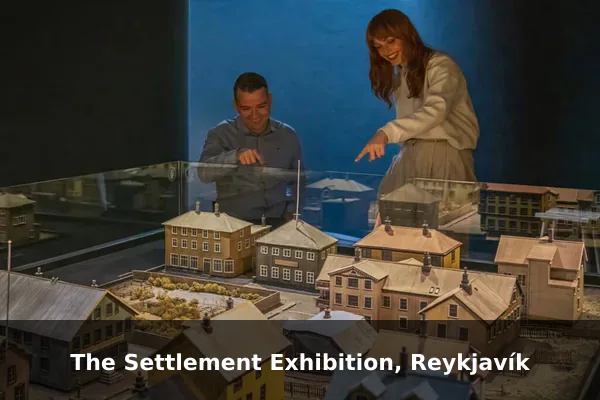
The Settlement Exhibition is built directly around an excavated Viking-age longhouse beneath Aðalstræti, generally considered the oldest known man-made structure in Reykjavík. Seeing the actual turf wall fragments in situ, rather than a reconstruction, gives a powerful sense of how the first settlers shaped this corner of the bay during the late ninth and tenth centuries.
Multimedia panels, interactive screens, and reconstructions place the ruins in context, showing how the longhouse was built, heated, and used for daily life. Visitors can study finds such as tools, animal bones, and personal items, and trace how the settlement-era landscape compares with the modern downtown streets just outside the door.
Travel tip: Pair it with a walk around the old harbor and downtown Reykjavík, since the exhibition is compact and central.
Best time to visit: Year-round, best at opening around 10:00; listed hours are usually daily 10:00-17:00.
Ticket price: Adults are listed at about ISK 3,100; children under 18 are free; Reykjavík City Card holders may be covered.
Árbær Open Air Museum, Reykjavík
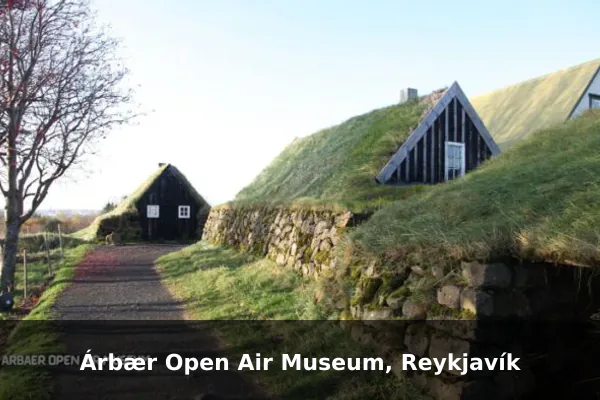
Árbær Open Air Museum recreates an entire historic Reykjavík neighborhood on the site of a former farm, gathering more than twenty relocated buildings that show how the capital evolved from a rural settlement into a modern town. It is one of the most immersive ways to picture everyday Icelandic life across the nineteenth and twentieth centuries without leaving the city.
Visitors can wander a re-created village street with timber houses, workshops, a small church, and turf-roofed structures, often staffed by costumed guides demonstrating crafts or domestic routines. Interior rooms are furnished period by period, and seasonal events such as Christmas and summer fairs add traditional music, food, and farm-animal encounters to the open-air experience.
Travel tip: Take a city bus or taxi from central Reykjavík and allow extra time in winter when daylight is short.
Best time to visit: June-August from 10:00-17:00 for the fullest open-air experience; September-May afternoons are quieter.
Ticket price: Adults are listed at about ISK 2,550; children under 18 are free; check city museum passes for savings.
Skógar Museum, South Iceland
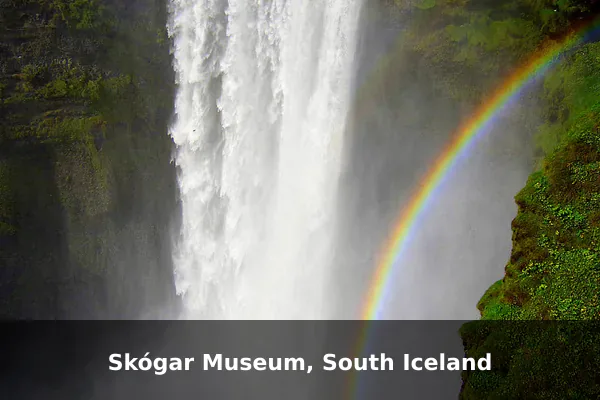
Skógar Museum is one of Iceland’s most substantial regional heritage collections, combining a folk museum, a transport and communications museum, and an open-air section of relocated turf houses and a small wooden church. Sitting just off the south coast Ring Road near Skógafoss, it turns a quick waterfall stop into a meaningful look at how rural Icelanders lived, traveled, and worshipped.
Inside, visitors can explore fishing gear, farming tools, textiles, and a notable collection assembled over decades by local historian Þórður Tómasson. The open-air buildings can usually be entered to see low-ceilinged living rooms and pantries, while the transport hall displays early vehicles, telecom equipment, and machinery that shaped twentieth-century life in the south.
Travel tip: Visit before or after Skógafoss, but do not treat it as a quick photo stop; the collections need at least 1.5-2 hours.
Best time to visit: June-August, 09:00-18:00; September-May, 10:00-17:00, with fewer tour groups early in the day.
Ticket price: 2026 adult admission is listed at ISK 3,000; students and seniors ISK 2,000; children under 12 are free with an adult.
Keldur Turf Farm, Rangárvellir
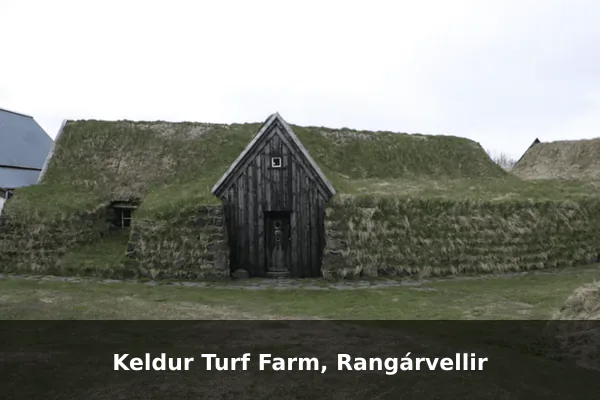
Keldur is widely regarded as one of the oldest and most atmospheric surviving turf farm complexes in Iceland, with parts of its main hall thought to date back to the medieval period. Tucked into the Rangárvellir countryside under the shadow of nearby volcanic landscapes, it offers a rare chance to see a working-style farm site that has been continuously inhabited for centuries.
Visitors can walk through the cluster of low turf-and-timber buildings, including the old farmhouse, outbuildings, and a small chapel, while guided tours explain construction techniques, daily routines, and the saga-era stories tied to the site. The surrounding meadows, streams, and views toward the highlands add a quiet, lived-in atmosphere that few reconstructed museums can match.
Travel tip: Drive carefully on the rural approach road, stay within visitor areas, and respect that nearby farm buildings are private.
Best time to visit: June 1-August 31, 10:00-17:00; guided tours are typically offered at 11:00 and 15:00.
Ticket price: Adults are listed at ISK 2,500; students and seniors ISK 1,600; children under 18 are free.
Eldheimar, Vestmannaeyjar
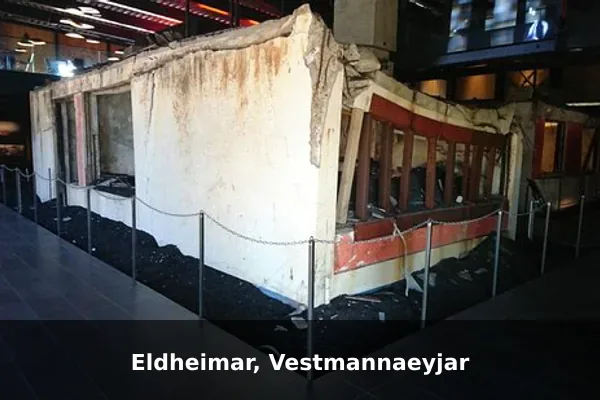
Eldheimar is a striking volcano museum on Heimaey that confronts visitors with the raw power of the 1973 eruption, when fresh lava and ash buried a third of the town in weeks. It is worth visiting because the building is constructed around a real excavated house, giving an unusually intimate sense of how families lost their homes overnight and how the island rebuilt itself.
Inside, visitors walk past the partially uncovered Gerðisbraut 10 house, examine recovered everyday objects, and follow exhibits on the evacuation, the cooling effort that saved the harbor, and the now-uninhabited island of Surtsey nearby. Multilingual audio guides, archival photos, and viewpoints over the lava field help connect the indoor story to the landscape just outside.
Travel tip: Coordinate your visit with the Landeyjahöfn-Heimaey ferry schedule and leave weather buffer time for island travel.
Best time to visit: May-September for easier ferry logistics; current general hours are listed as daily 11:00-17:00.
Ticket price: Adults are listed at about ISK 3,550; seniors ISK 2,900; ages 10-18 ISK 1,900; under 10 free.
The Settlement Center, Borgarnes
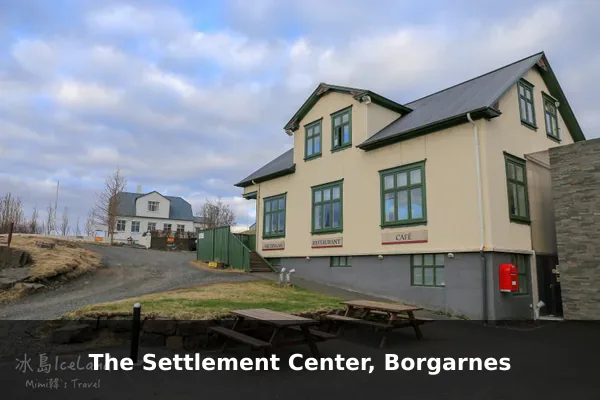
The Settlement Center occupies two carefully restored old buildings in Borgarnes and offers one of Iceland’s clearest introductions to how Norse settlers arrived, claimed land, and built a society in the 9th and 10th centuries. It is a worthwhile stop because it pairs that wider settlement story with the dramatic local biography of Egil Skallagrímsson, whose saga is rooted in the surrounding Borgarfjörður region.
Visitors follow two separate audio-guided exhibitions, one on the Settlement of Iceland and one on Egil’s Saga, with atmospheric installations, sculpted figures, and translated narration that bring the medieval sources to life. The on-site restaurant serves Icelandic dishes, and the harborside setting makes it easy to combine the visit with a short walk around historic Borgarnes.
Travel tip: Plan it as a Ring Road break between Reykjavík and the north or Snæfellsnes, and reserve extra time if eating at the restaurant.
Best time to visit: Year-round, best around 10:00-12:00; exhibition hours are commonly listed as daily 10:00-16:00, with some services longer.
Ticket price: Two audio-guided exhibitions are listed at about ISK 3,900 for adults; reduced, child, and family rates are available.
Eiríksstaðir Living History Museum, Dalir
Eiríksstaðir sits in the quiet Haukadalur valley in Dalir, on the site traditionally linked with the home of Erik the Red and the birthplace of Leif Erikson, the explorer associated with early Norse voyages to North America. It is worth visiting because a faithfully reconstructed Viking-age longhouse stands beside the original archaeological ruins, giving a tangible sense of how a chieftain’s household lived around the year 1000.
Costumed interpreters demonstrate daily Viking skills such as tool use, weaving, and storytelling, and answer questions about saga sources, family ties, and the voyages west to Greenland and Vinland. The compact site, low turf walls, and surrounding farmland make it especially atmospheric on calm spring and summer days before continuing through the Dalir region.
Travel tip: Use a rental car, check road conditions before the Dalir detour, and book ahead for groups of more than ten.
Best time to visit: April 1-October 31, 10:00-17:00; late morning is best before longer regional drives.
Ticket price: Adults are listed at ISK 2,900; students and seniors about ISK 2,500; children 12 and under are free with an adult.
Glaumbær Farm and Museum, Skagafjörður
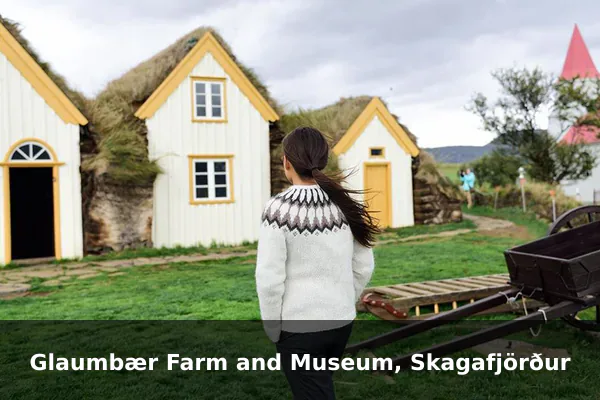
Glaumbær in Skagafjörður preserves one of Iceland’s most complete and photogenic turf-house complexes, with grass-covered roofs and timber gables set against the wide northern farmland. It is worth visiting because the cluster of interconnected rooms shows how rural Icelandic families actually lived for centuries, balancing harsh weather, limited timber, and tight communal living under one continuous turf structure.
Inside, visitors move through the badstofa sleeping hall, pantries, kitchen, and parlors furnished with period tools, textiles, and household objects that illustrate everyday work and rest. Two 19th-century timber houses nearby host additional exhibitions and a café, while interpretive signs outside explain construction techniques and the farm’s links to early Vinland traditions.
Travel tip: Bring a light rain layer and avoid climbing on turf walls; the museum is easiest by private car just off Route 1.
Best time to visit: Summer, especially 10:00-12:00 or after 16:00; current opening is listed as daily 10:00-18:00 in season.
Ticket price: 2026 adult admission is listed at ISK 2,200; reduced admission ISK 1,900; children 0-17 are free.
Herring Era Museum, Siglufjörður
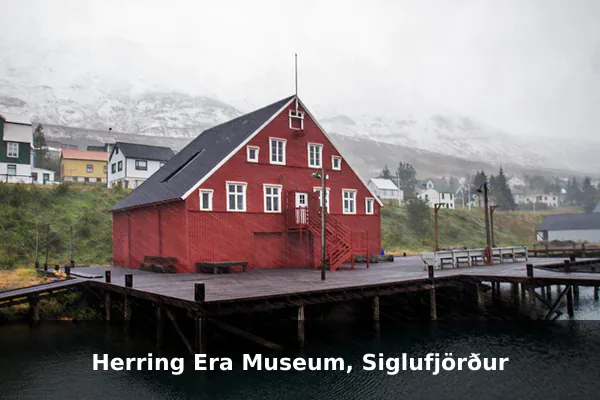
The Herring Era Museum in Siglufjörður tells the story of the early 20th-century herring boom that briefly made this remote northern fjord one of the busiest fishing harbors in the North Atlantic. It is worth visiting because the award-winning complex spreads across several restored buildings on the original waterfront, recreating the noise, smells, and rhythm of a working salting station rather than presenting industry behind glass.
Visitors can step into a boarding house for salting girls, examine boats and processing machinery in the boathouse, and follow exhibits on factory work, migration, and the sudden collapse of the herring stocks. Live demonstrations in summer, period costumes, and the dramatic mountain backdrop of Siglufjörður make the maritime heritage feel close at hand.
Travel tip: Check mountain-pass and tunnel conditions before driving from Akureyri, especially outside summer.
Best time to visit: June-August, usually 10:00-17:00; May and September afternoons are quieter, while winter visits are by arrangement.
Ticket price: Recent 2026 regional listings show adults about ISK 2,400; seniors and younger visitors about ISK 1,300; children under 16 free with an adult.
Official references
- Visit Iceland – Official national travel information for Iceland; useful for trip planning, regional context, maps, getting around, and tourism basics.
- Safetravel Iceland – Official source for safe travel guidance, alerts, driving and outdoor conditions relevant to reaching museums and heritage sites.
- Iceland Road and Coastal Administration Traffic Info – Primary road-condition and traffic source for travel logistics, especially for Ring Road and rural heritage-site access.
- The Museum Council of Iceland – Official source on accredited museums in Iceland and museum-sector oversight.
- Cultural Heritage Agency of Iceland – Minjavefsja – Primary heritage authority and cultural-heritage map for checking protected sites, archaeological remains, and listed cultural heritage.
