
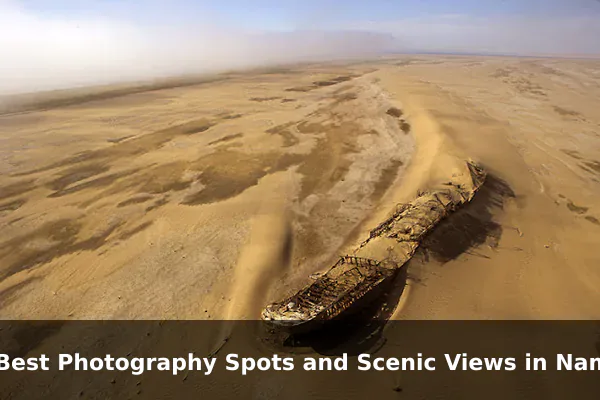
Namibia is one of Africa’s most rewarding destinations for photographers, offering vast desert landscapes, dramatic light, and scenery that ranges from towering red dunes to eerie ghost towns and star-filled night skies. Its low population density, clean air, and protected wilderness areas mean that many of its most photogenic locations remain uncrowded and remarkably pristine, giving both professionals and casual travelers the space and time to compose memorable images.
This guide highlights ten of the country’s standout photography spots and scenic viewpoints, spread across the Namib Desert, the central highlands, and the southern canyons. For each location you’ll find a brief note on what makes it special, along with practical guidance on the best time to shoot, how to access the area, and what to expect in terms of entry fees. Because park rules, gate times, and prices can change seasonally, always confirm current details with official sources such as the Namibia Tourism Board and Namibia Wildlife Resorts before you travel.
Deadvlei and Sossusvlei (Namib-Naukluft National Park)
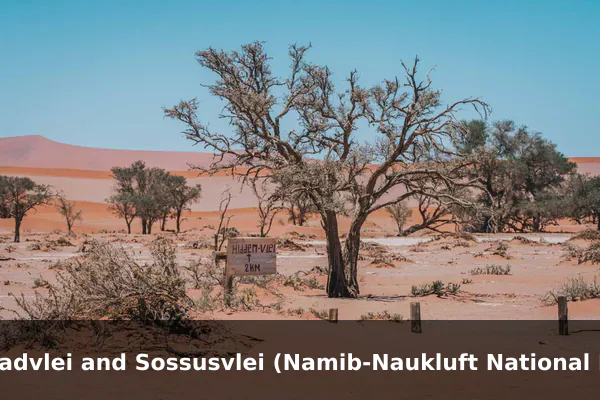
Deadvlei is one of the most recognizable landscapes on Earth, a cracked white clay pan studded with the skeletal silhouettes of camel-thorn trees that died centuries ago yet still stand, scorched and preserved by the dry desert air. Encircled by some of the tallest dunes in the world, glowing apricot and burnt orange at first light, the scene offers a surreal interplay of stark white floor, charcoal trees, and luminous sand that rewards photographers seeking bold, graphic compositions.
Visitors can frame the dark trees against the sunlit dune faces for high-contrast images, or wait for the moment the rising sun splits the pan into shadow and glow. Nearby Sossusvlei itself is a clay pan that occasionally holds shallow water, mirroring the surrounding dunes, while the short walk between the car park and Deadvlei lets you experiment with scale by placing distant figures against the immense ridgelines.
Travel tip: Hire a 4×4 shuttle from the 2×4 car park for the final sandy stretch to Sossusvlei, and bring plenty of water as there is no shade on the walk to Deadvlei.
Best time to visit: Best photographed at sunrise just after the gate opens; the cooler months from May to September offer clearer skies and softer light.
Ticket price: A daily park conservation fee applies per adult plus a vehicle fee; prices vary, so confirm current rates with Namibia Wildlife Resorts.
Dune 45 (Sossusvlei Road)
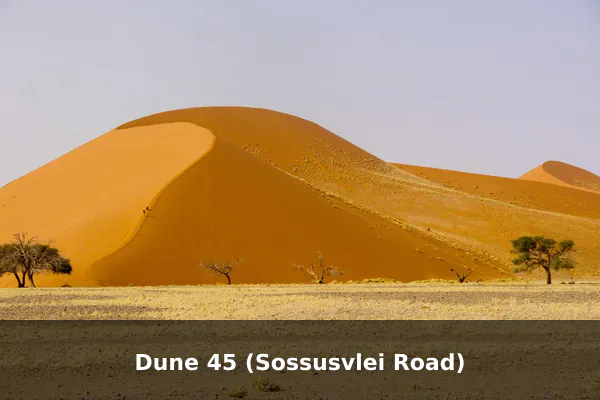
Dune 45 earns its fame from its perfectly sculpted, gently curving ridgeline and its convenient position right beside the road into Sossusvlei, making it the most accessible of the great red dunes for early-morning climbers. Its star shape and clean, wind-carved crest create elegant lines that catch the first warm light beautifully, which is why it draws photographers chasing classic Namib dune images without a long approach.
Climbers can ascend the ridge to capture long shadows stretching across the rippled sand and the contrast between sunlit and shaded slopes. From the crest you gain sweeping views over the surrounding sand sea, while at the base a scattering of hardy camel-thorn trees provides foreground interest and a sense of scale against the towering apricot wall behind them.
Travel tip: Climb the ridge rather than the steep face for an easier ascent, and arrive early to capture the dune before footprints cover the crest.
Best time to visit: Sunrise is ideal for warm side-light and long shadows; visit between April and October to avoid the harshest midday heat.
Ticket price: Covered by the Namib-Naukluft park conservation fee; no separate charge for the dune itself.
Sesriem Canyon
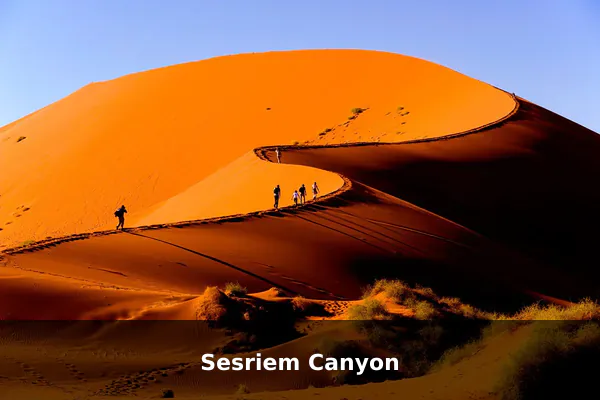
Sesriem Canyon is a narrow gorge carved over millions of years by the Tsauchab River, cutting a slender corridor through layered sedimentary rock barely a few meters wide in places. Its smooth, sculpted walls, shaded recesses, and occasional reflective pools offer an intimate, textural counterpoint to the vast open dunes nearby, making it a rewarding stop for photographers who enjoy detail and pattern over grand vistas.
Walking through the cool, shaded canyon, visitors can photograph the rich tones and water-worn striations of the rock, the play of filtered light striking the upper walls, and still pools that mirror the canyon above. The descent into the gorge and the winding path along its floor offer changing perspectives, from tight framed corridors to wider sections where the sky opens overhead.
Travel tip: Wear sturdy shoes for the rocky descent and visit when light filters into the gorge rather than during flat overhead sun.
Best time to visit: Late afternoon for softer canyon light; the dry season from May to October is safest as flash floods can occur after rain.
Ticket price: Included in the Namib-Naukluft park entry fee; prices vary by season.
Etosha National Park Salt Pan and Waterholes
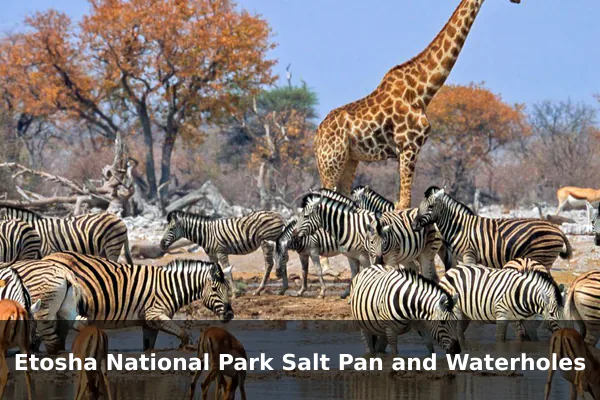
Etosha is defined by its enormous salt pan, a shimmering white expanse so vast it is visible from space, surrounded by arid plains that draw extraordinary concentrations of wildlife to scattered waterholes. The combination of minimalist, almost abstract pan landscapes and reliable game viewing makes it a standout destination for photographers who want both sweeping emptiness and intimate animal portraits.
Visitors can photograph elephants, rhinos, lions, and giraffes gathering at waterholes, often framed against the pale, featureless pan for striking minimalist compositions. The floodlit waterholes at rest camps allow shooting into the evening and night, while the bright, reflective surface of the pan and the heat shimmer above it create opportunities for ethereal, high-key images of distant herds.
Travel tip: Position yourself at floodlit camp waterholes such as Okaukuejo at dusk for unobstructed wildlife shots, and keep a telephoto lens ready from your vehicle.
Best time to visit: The dry season from June to October concentrates wildlife at waterholes; early morning and late afternoon give the best light.
Ticket price: A daily park entry fee per adult plus vehicle fee applies; confirm current amounts with official park sources.
Spitzkoppe
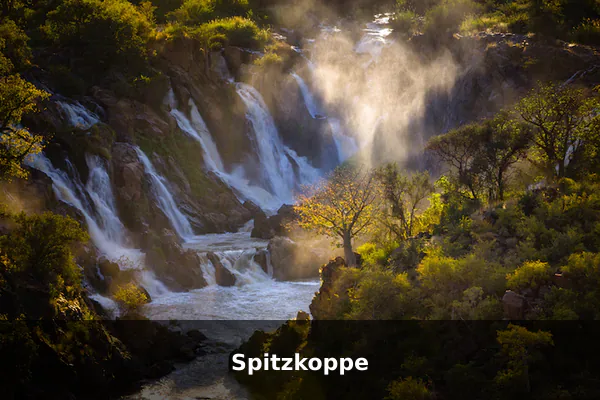
Spitzkoppe is a cluster of dramatic granite inselbergs rising abruptly from the flat surrounding plains, their weathered domes and jagged peaks often called the Matterhorn of Namibia. The smooth, ancient rock turns deep gold and fiery orange at the edges of the day, and the remote, light-pollution-free setting makes it one of the country’s premier locations for both landscape and astrophotography.
Photographers can capture the glowing granite arches and balanced boulders during golden hour, using the natural rock window as a frame for the plains beyond. After dark, the clear desert skies reveal the Milky Way arcing over the peaks, and visitors can explore the boulder fields and ancient rock-art sites for foreground subjects that anchor wide night-sky compositions.
Travel tip: Camp overnight on site for unobstructed night-sky shots, and bring a headlamp and tripod for the dark, light-pollution-free conditions.
Best time to visit: Sunset and sunrise for warm rock tones; the dry winter months offer the clearest skies for star photography.
Ticket price: A community-managed entry and camping fee applies; prices vary, so confirm at the gate.
Fish River Canyon
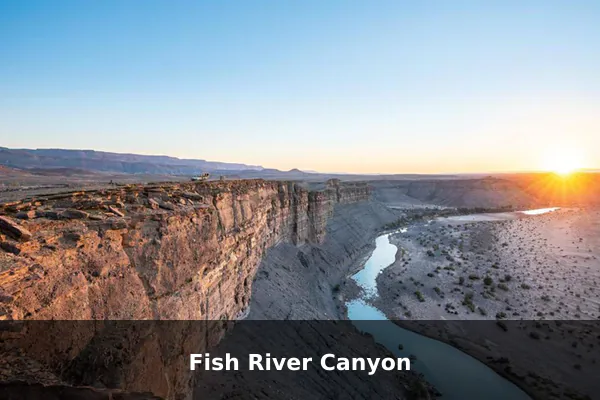
Fish River Canyon ranks among the largest canyons on Earth, and its sheer scale makes it one of Namibia’s most rewarding subjects for landscape photography. The deeply eroded gorge reveals layer upon layer of rock that glows in warm tones when the low sun rakes across the rim, giving images a powerful sense of depth and distance.
Visitors can position themselves at the established lookouts to frame the river’s dramatic bends far below, then move along the rim to find foreground rocks and changing perspectives. The vastness also lends itself to wide panoramas, while a long lens helps isolate the winding watercourse and the textured canyon walls.
Travel tip: Shoot from the main viewpoint near Hobas and walk along the rim for varied compositions; carry water as facilities are limited.
Best time to visit: Sunrise and sunset for depth and shadow; the cooler season from May to September is best as summer temperatures are extreme.
Ticket price: A conservation fee applies for rim access; prices vary by season.
Kolmanskop Ghost Town (near Lüderitz)
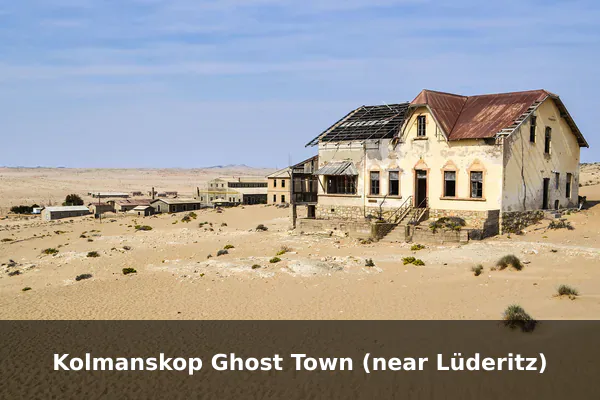
Kolmanskop is a former diamond-mining settlement slowly being reclaimed by the desert, and that slow burial is exactly what draws photographers. Sand pours through doorways and pools against the walls of faded colonial-era rooms, creating surreal interior scenes that feel both abandoned and strangely beautiful.
Inside the houses, visitors can compose shots of light streaming through broken windows onto sloping dunes of sand, with peeling paint adding colour and texture. Moving between rooms reveals constantly shifting compositions, so it pays to explore several buildings and watch how the angle of the light transforms each space.
Travel tip: Buy a photography permit that allows early-morning or sunset access for the best light through the windows and fewer visitors.
Best time to visit: Early morning for soft directional light filling the sand-filled rooms; guided tours run on a fixed daily schedule.
Ticket price: A standard entry permit applies, with a higher-priced photographer's permit for extended hours; prices vary.
Twyfelfontein Rock Engravings (UNESCO World Heritage Site)
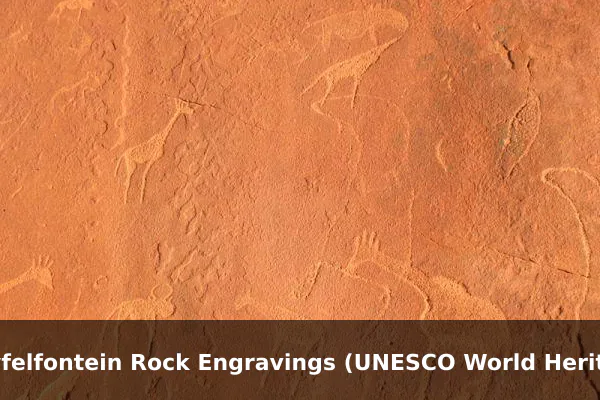
Twyfelfontein, a UNESCO World Heritage Site in the Damaraland region, holds one of Africa’s richest concentrations of ancient San rock engravings. Set against weathered red sandstone, the carved animals and symbols offer a rare chance to photograph human history within a striking natural backdrop.
Walking the marked trails with a guide, visitors can study and frame engravings of giraffes, rhinos, and other figures etched into the rock faces. The surrounding sandstone formations and arid hills also make compelling wide shots, while close-ups capture the fine detail and texture of the engraved surfaces.
Travel tip: Engravings can only be viewed with an official guide, so book a tour and bring a polarizing filter to reduce glare on the rock surfaces.
Best time to visit: Early morning before the heat and harsh light; the dry season from May to October offers comfortable touring conditions.
Ticket price: A site entry fee plus guide fee applies; confirm current rates on arrival.
Skeleton Coast Shipwrecks

The Skeleton Coast is a haunting stretch where the Namib Desert meets the cold Atlantic, and its rusting shipwrecks have become iconic photographic landmarks. Frequent coastal fog and bleak, windswept shorelines lend images a moody, otherworldly atmosphere that is difficult to find anywhere else.
Along the coast, visitors can photograph corroded hulls half-buried in sand, with mist softening the horizon and muting the light for dramatic effect. The meeting of dunes, surf, and weathered wreckage offers strong contrasts, and patient observers may catch seabirds or seals adding life to the stark scenery.
Travel tip: Check tide and fog conditions before driving, stay on marked tracks, and fuel up in Swakopmund as services are scarce along the coast.
Best time to visit: Early morning often brings atmospheric coastal fog; the cooler months reduce harsh contrast on the sand and wrecks.
Ticket price: A park permit is required to enter the Skeleton Coast conservation areas; prices vary, so confirm with park authorities.
Quiver Tree Forest (near Keetmanshoop)
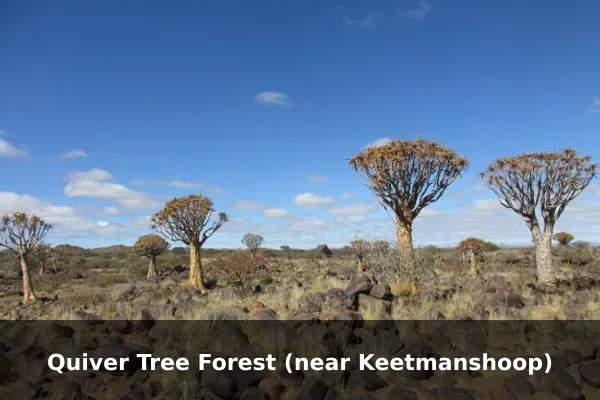
The Quiver Tree Forest near Keetmanshoop is a dense grove of distinctive aloe quiver trees whose branching, sculptural forms stand out against open desert skies. Their unusual silhouettes make them a favourite for both sunset photography and, after dark, for capturing the brilliance of the southern night sky.
Visitors can wander among the trees to find clean compositions that isolate individual shapes against colourful evening light or the Milky Way overhead. The surrounding dolerite boulders and clear, dry-season skies add depth to the scene, rewarding those who linger from golden hour into the night.
Travel tip: Stay at the adjacent farm or camp for after-dark access, and use a tripod to capture the trees beneath the southern stars.
Best time to visit: Sunset for silhouettes and the dry winter months for clear night skies; the site is open to day visitors as well.
Ticket price: A small private entry fee applies at the farm; prices vary.
Official references
- Namibia Tourism Board (official) (namibiatourism.com.na) – Official national tourism board with authoritative information on destinations, regions, travel logistics, and visitor practicalities across Namibia.
- Namibia Wildlife Resorts (NWR) (nwr.com.na) – Official state operator of accommodation and access within Namibia's national parks (including Sossusvlei/Namib-Naukluft and Etosha), with current rules, gate times, and booking details essential for photography access logistics.
- Ministry of Environment, Forestry and Tourism (Namibia) (meft.gov.na) – Government authority overseeing national parks and protected areas; primary source for park regulations, conservation status, and access conditions for scenic locations.
- UNESCO World Heritage Centre – Authoritative listings for Namibian World Heritage sites such as the Namib Sand Sea and Twyfelfontein, useful for verifying location significance and protected-area facts.
- Namibian Police / Ministry of Home Affairs, Immigration, Safety and Security (mhaiss.gov.na) – Official source for visa, entry requirements, and safety guidance relevant to travel logistics for visiting photographers.
