
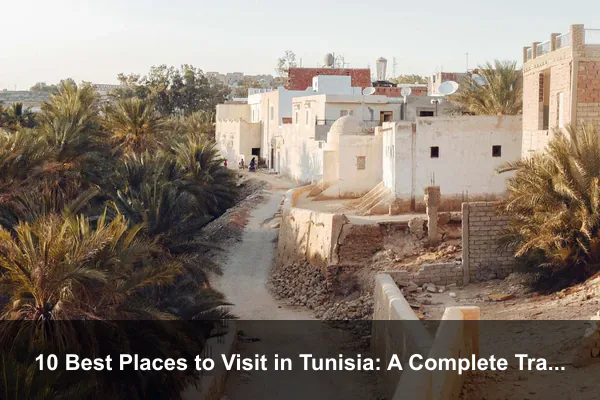
Tunisia rewards travelers who want a compact North Africa journey with real variety: Roman ruins, Islamic architecture, blue-and-white coastal villages, Sahara oases, island traditions, and working medinas all fit into one sensible route.
This plan keeps the focus entirely inside Tunisia and builds a practical north-to-south itinerary, pairing headline UNESCO sites with atmospheric local experiences so readers can compare what to see, when to go, and how to reach each stop.
Medina of Tunis
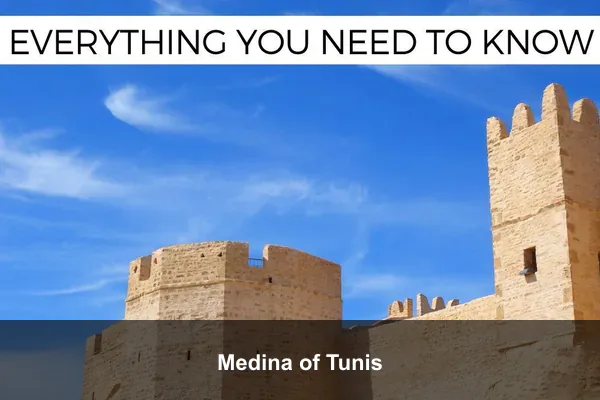
The Medina of Tunis is a living old-city maze in central Tunis, best visited for historic souks, city culture, shaded courtyards, mosques, and Ottoman-era architecture. Start at Bab Bhar, then wander slowly through lanes scented with spices, leather, and perfume, pausing for craft shops, tiled doorways, and glimpses of daily Tunisian life. Go in the morning for cooler, calmer exploring, especially from March to May or in October. Access is easy on foot from Bab Bhar, or by taxi if you are staying farther out, and it is worth carrying small cash because many smaller stalls are simpler to use without cards.
| Best for | Historic souks and city culture |
|---|---|
| Location | Central Tunis |
| Best time | Morning, March-May or October |
| Access | Walk from Bab Bhar or taxi |
Additional Info: Start at Bab Bhar and carry small cash because many small stalls are easier to use without cards.
Carthage Archaeological Site
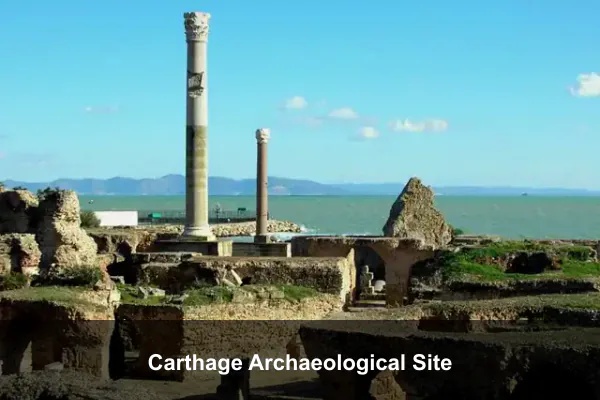
Carthage Archaeological Site is one of Tunisia’s essential stops for ancient history and sea views, spreading Punic, Roman, and early Christian remains across the coast northeast of Tunis. Visit the Antonine Baths, Punic ports, Byrsa Hill, and Roman villas as a series of short stops rather than one compact walk, since the ruins are scattered through modern Carthage. Weekday mornings in spring offer the easiest pace, with softer light and fewer groups. From Tunis, take the TGM train toward Carthage, then use short taxis or local rides between the main sights.
| Best for | Ancient history and sea views |
|---|---|
| Location | Carthage, northeast of Tunis |
| Best time | Weekday mornings in spring |
| Access | TGM train plus short taxis |
Additional Info: Plan the visit as several short stops because the baths, ports, hill, and villas are not all side by side.
Sidi Bou Said
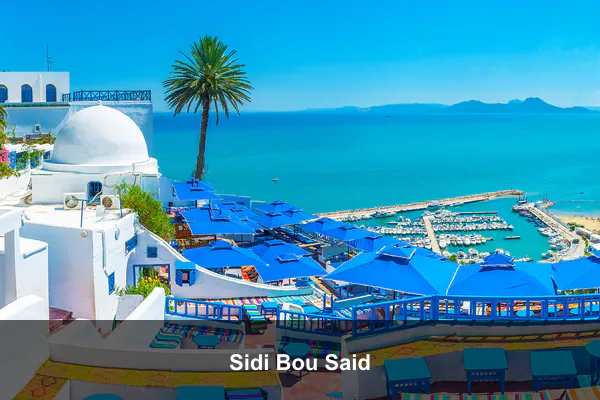
Sidi Bou Said is one of Tunisia’s most photogenic stops, a cliffside village above the Gulf of Tunis where blue-and-white lanes lead to sea terraces, small galleries, and relaxed coastal cafes. Visit early in the morning or late afternoon for softer light and fewer crowds, then wander uphill beyond the busiest cafe lanes to find quieter viewpoints over the marina and gulf. It is easy to reach from Tunis by TGM train, taxi, or guided tour, making it a simple half-day escape with strong views, cafe culture, and classic Mediterranean charm.
| Best for | Photography and coastal cafes |
|---|---|
| Location | Above the Gulf of Tunis |
| Best time | Early morning or late afternoon |
| Access | TGM train, taxi, or guided tour |
Additional Info: Walk uphill past the busiest cafe lanes for quieter viewpoints over the marina and gulf.
Dougga / Thugga
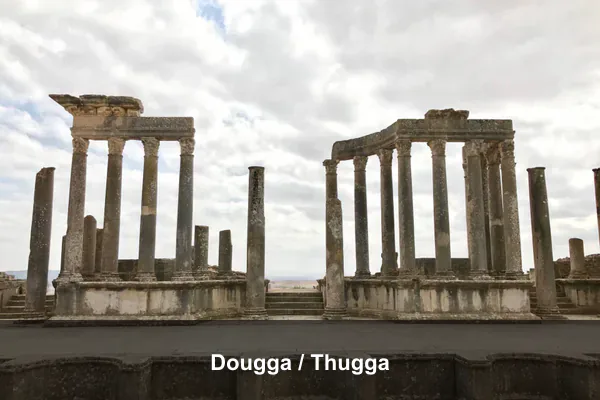
Dougga, also known as Thugga, is Tunisia’s most atmospheric Roman town, spread across an open hillside near Teboursouk in Beja Governorate. Visit for remarkably preserved temples, theaters, arches, and sweeping rural scenery, with olive groves and wide views giving the ruins a quiet, timeless feel. The best months are March to May, ideally before midday when the light is soft and the heat is easier. Most travelers visit with a private driver from Tunis, allowing enough time to wander the site slowly. Bring water, a hat, and snacks, as shade and services are limited once you are inside.
| Best for | Roman temples and rural scenery |
|---|---|
| Location | Near Teboursouk, Beja Governorate |
| Best time | March-May, before midday |
| Access | Private driver from Tunis |
Additional Info: Bring water, a hat, and snacks because shade and services are limited once inside the site.
Kairouan
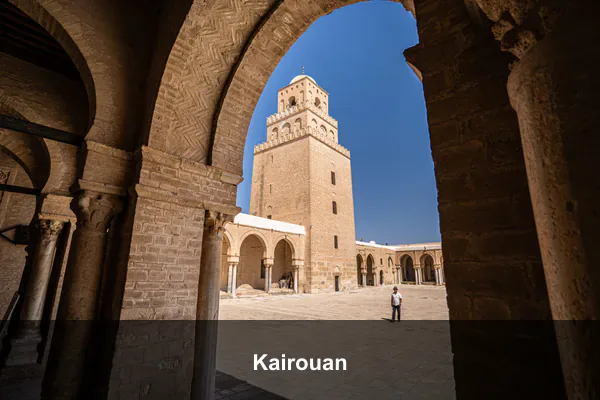
Kairouan is one of Tunisia’s great centers of religious heritage and crafts, a sacred city in Central Tunisia where monumental mosque courtyards, quiet medina lanes, ancient reservoirs, and carpet workshops create a deeply atmospheric stop. Visit in the daytime from October to April, when walking is more comfortable, and arrive by louage, bus, or private driver. Dress modestly around mosque courtyards, and step into carpet shops only when you have time to look, compare, and negotiate without rushing.
| Best for | Religious heritage and crafts |
|---|---|
| Location | Central Tunisia |
| Best time | October-April, daytime |
| Access | Louage, bus, or private driver |
Additional Info: Dress modestly around mosque courtyards and only enter carpet shops when you have time to negotiate.
Amphitheatre of El Jem
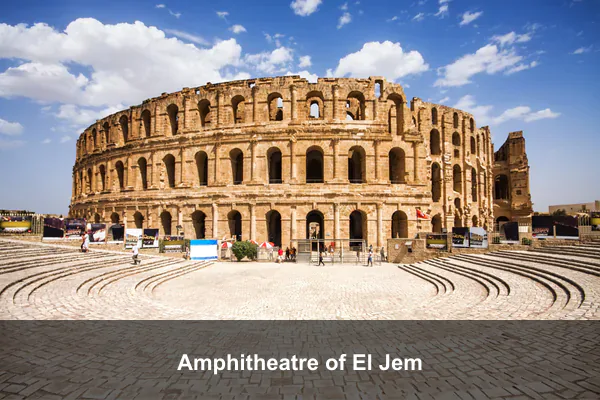
The Amphitheatre of El Jem is Tunisia’s great Roman showstopper, a colossal arena rising above El Jem in Mahdia Governorate with tunnels, tiers, and sweeping views that make its scale unforgettable. Visit in the morning or at golden hour for cooler air and dramatic light across the stone arches, then pair it with the nearby archaeological museum to see superb mosaics and get a clearer sense of Roman villa life. It is especially rewarding for Roman architecture and mosaics, and access is straightforward by train from Sousse or Tunis.
| Best for | Roman architecture and mosaics |
|---|---|
| Location | El Jem, Mahdia Governorate |
| Best time | Morning or golden hour |
| Access | Train from Sousse or Tunis |
Additional Info: Pair the amphitheatre with the nearby archaeological museum to understand the mosaics and villa life.
Medina of Sousse and Ribat
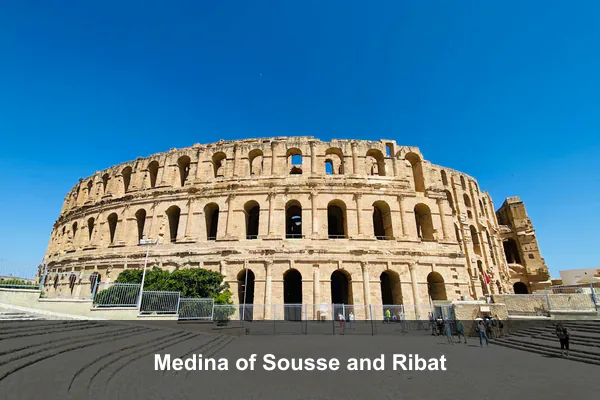
The Medina of Sousse pairs a lively east-coast city break with some of Tunisia’s most accessible early Islamic fortifications. Start by climbing the ribat tower, where views over the ramparts, rooftops, and sea make the compact medina easier to understand, then wander into the lanes for markets, mosque walls, and old stone gates. It is best visited in April-June or September-October, when walking is more comfortable, and Sousse is easy to reach by train or louage, or use as a coastal base for nearby trips.
| Best for | Fortifications and seaside city breaks |
|---|---|
| Location | Sousse, east coast |
| Best time | April-June or September-October |
| Access | Train, louage, or coastal base |
Additional Info: Climb the ribat tower before exploring the lanes so the medina layout makes more sense from above.
Djerba Island Heritage Circuit

Djerba Island’s heritage circuit is best for travelers who want island culture with relaxed beaches close by. In southeast Tunisia, the route links Houmt Souk’s markets and whitewashed lanes with Guellala’s pottery workshops, Erriadh’s street murals, the historic El Ghriba synagogue, and sandy coastlines for an easy swim between stops. The most efficient way to see it is to hire a local driver for one day, connecting Guellala, Erriadh, El Ghriba, and Houmt Souk without backtracking. Visit in April-June or September-November for warm weather and lighter crowds; access is simple by flight, ferry, causeway, or taxi.
| Best for | Island culture and relaxed beaches |
|---|---|
| Location | Djerba, southeast Tunisia |
| Best time | April-June or September-November |
| Access | Flight, ferry, causeway, or taxi |
Additional Info: Hire a local driver for one day to link Guellala, Erriadh, El Ghriba, and Houmt Souk efficiently.
Tozeur Oasis and Chott el Jerid
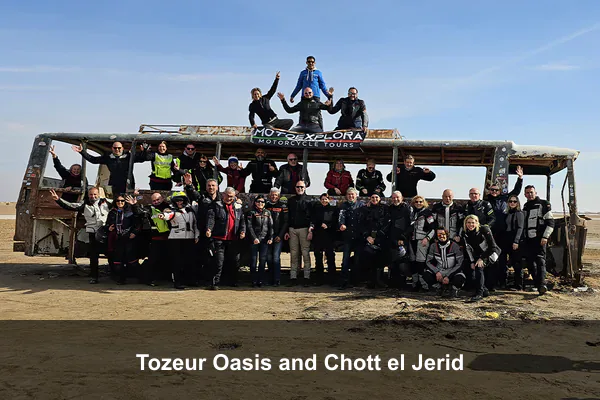
Tozeur Oasis and Chott el Jerid make a memorable southwest Tunisia stop for palm groves, sunset salt flats, and easy Sahara scenery without going fully remote. Base yourself in Tozeur to wander brickwork alleys, visit date-palm oases, watch the light shift across Chott el Jerid, and arrange day trips to Ong Jemel or the mountain oases. The best time is November to March, when desert temperatures are more comfortable. Access is by flight, train, or a long drive, but for off-road routes use a licensed 4×4 driver, especially after wind or rain.
| Best for | Oases, sunsets, and desert scenery |
|---|---|
| Location | Southwest Tunisia |
| Best time | November-March |
| Access | Flight, train, or long drive |
Additional Info: Use a licensed 4×4 driver for Ong Jemel or mountain-oasis trips, especially after wind or rain.
Chenini and Ksar Ouled Soltane
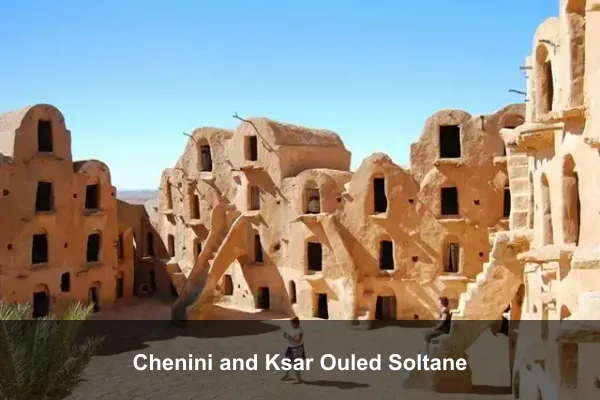
Chenini and Ksar Ouled Soltane make one of Tunisia’s most evocative southern detours, linking hilltop Berber lanes with fortified granary courtyards and wide desert panoramas. In Tataouine Governorate, Chenini is best explored slowly with a local guide, who can explain the troglodyte homes, mosque, legends, and viewpoints hidden along its steep stone paths. Continue to Ksar Ouled Soltane for its stacked ghorfas and photogenic courtyard architecture. Visit from October-April, starting early for cooler temperatures and softer light, and arrange a driver from Tataouine or Djerba to connect the ksour comfortably.
| Best for | Berber villages and desert architecture |
|---|---|
| Location | Tataouine Governorate |
| Best time | October-April, early start |
| Access | Driver from Tataouine or Djerba |
Additional Info: Take a local guide in Chenini because the steep lanes and viewpoints are easier to understand with context.
Tips Before You Go
Build the trip by region instead of zigzagging: base in Tunis for the medina, Carthage, Sidi Bou Said, and Dougga; continue to Kairouan, El Jem, and Sousse; then fly or drive south for Djerba, Tozeur, and the ksour trail.
Spring and autumn are the easiest seasons for heat, walking, and desert travel. Carry small cash for markets and taxis, dress modestly in religious towns, agree taxi prices before departure, and confirm current opening hours through Discover Tunisia and UNESCO Tunisia before finalizing long drives.
