

Beyond the postcard icons of the Sydney Opera House and the Great Barrier Reef, Australia hides a quieter, wilder side that most visitors never reach. From glowing lava tubes in the outback to remote gorges carved over two billion years and islands so isolated that daily visitor numbers are capped, these lesser-known corners reward travelers willing to stray from the usual routes. This guide gathers ten genuine hidden gems spread across the continent, each chosen for its distinct scenery, cultural depth, or sense of solitude.
For every destination below you will find a practical travel tip, guidance on the best time to visit, and a note on likely ticket or entry costs so you can plan realistically. Because access rules, seasons, and prices in remote Australia change with weather, road conditions, and management updates, always confirm the latest details with official sources such as Parks Australia, state tourism boards, and Smartraveller before you set out. Pack for long distances, respect Indigenous heritage sites, and give yourself extra time, because the reward for reaching these places is space, silence, and scenery few others ever witness.
Karijini National Park, Western Australia
Deep in the remote Pilbara, Karijini is one of Australia’s most spectacular yet least-crowded landscapes, where rivers have carved narrow gorges through rock that is billions of years old. The layered red walls, plunging chasms, and spring-fed pools feel worlds away from the coast, rewarding the long drive with raw, ancient scenery few travellers ever see.
Visitors can hike into gorges such as Dales, Weano, Hancock, and Hamersley, climbing down ladders and along ledges to reach swimming holes like Fern Pool and Fortescue Falls. Look out for the vivid contrast of dark iron-rich stone against green vegetation, seasonal wildflowers on the surrounding plateau, and the cool, echoing microclimate hidden at the bottom of each gorge.
Travel tip: Carry plenty of drinking water, fuel up before entering, and drive a high-clearance or 4WD vehicle as many access roads are unsealed; check road conditions before departure.
Best time to visit: Cooler dry season from roughly May to September; start hikes early morning to avoid midday heat.
Ticket price: A park entry fee typically applies per vehicle; prices vary, so confirm current rates with Parks and Wildlife Western Australia.
Coober Pedy, South Australia

Coober Pedy is unlike anywhere else in the country, an opal-mining town in the arid outback where residents have moved life underground to escape the searing heat. The result is a surreal community of subterranean homes, hotels, shops, and churches carved directly into the earth, giving the town a frontier atmosphere shaped by more than a century of gem hunting.
Visitors can tour working and historic mines, try their hand at ‘noodling’ for leftover opal in permitted areas, and step inside underground churches where the rock walls stay naturally cool year-round. The stark, cratered landscape around town also draws attention for its otherworldly appearance, which has featured as a backdrop in several films.
Travel tip: Book underground 'dugout' accommodation for a unique stay and bring sun protection; never walk near unmarked mine shafts on the surrounding fields.
Best time to visit: Autumn to spring (roughly April to October) for milder temperatures; summer heat is extreme.
Ticket price: The town is free to explore; guided mine and museum tours charge a fee, and prices vary by operator.
Lord Howe Island, New South Wales
Lying in the Tasman Sea, Lord Howe is a UNESCO World Heritage-listed island that strictly limits visitor numbers, keeping its lagoons, forests, and volcanic peaks remarkably unspoiled. The cap on tourists means empty beaches, uncrowded trails, and a slow, unhurried pace that has all but vanished from more popular Australian destinations.
Visitors can snorkel the world’s southernmost coral reef, kayak the sheltered lagoon, and hike beneath the twin summits of Mount Gower and Mount Lidgbird. Keep an eye out for endemic birdlife and the clear, shallow waters teeming with fish, best explored slowly given the island’s deliberately low-key, car-light way of life.
Travel tip: Book flights and accommodation well ahead because only a limited number of tourists are permitted at any time; pack reef-safe sunscreen.
Best time to visit: September to June for warmer weather and snorkeling; peak summer books out fastest.
Ticket price: Access is via flight and a stay; an environmental levy may apply, and costs vary, so check official island guidance.
Bay of Fires, Tasmania

Stretching along Tasmania’s northeast coast, the Bay of Fires is famed for the brilliant orange lichen that coats its granite boulders, set against powder-white sand and startlingly clear turquoise water. Its remoteness and lack of development have preserved a wild, pristine shoreline that consistently ranks among the most beautiful in the country.
Visitors can walk long empty stretches of beach, swim and snorkel in sheltered coves, and photograph the striking colour contrast that gives the coast its name. The area also links to quiet lagoons and coastal heath, and multi-day walkers can trace the shoreline while spotting seabirds and the occasional dolphin offshore.
Travel tip: There is little infrastructure, so bring food, water, and layers; free camping areas fill quickly in summer, so arrive early.
Best time to visit: Summer and early autumn (December to April) for the warmest, calmest coastal conditions.
Ticket price: Free to visit; some nearby camping and conservation areas may charge modest fees that vary.
Undara Lava Tubes, Queensland
In the volcanic country of North Queensland’s Gulf Savannah, the Undara Lava Tubes formed when a massive lava flow drained beneath a hardened crust, leaving behind one of the longest and best-preserved lava tube systems on Earth. Stepping inside these ancient tunnels offers a rare, tangible glimpse of the region’s fiery geological past.
Visitors join guided walks that lead through cavernous arches and dim chambers where the air turns noticeably cooler and rock formations reveal the flow’s history. Above ground, the surrounding savannah supports abundant wildlife, and dusk often brings the spectacle of microbats and their predators emerging from the cave entrances.
Travel tip: The tubes can only be entered on a guided tour, so book in advance; wear closed shoes and bring a light jacket for cooler cave temperatures.
Best time to visit: Dry season from around April to October when access roads and tours run reliably.
Ticket price: Guided tours charge a fee; prices vary by tour length, so confirm with the operator or Tourism and Events Queensland.
Flinders Ranges and Wilpena Pound, South Australia
The Flinders Ranges rise from the arid South Australian outback as some of the oldest mountain landscapes on Earth, crowned by Wilpena Pound, a huge natural basin ringed by weathered peaks. Steeped in the living culture of the Adnyamathanha people, whose creation stories explain the amphitheatre’s shape, it rewards travellers who venture beyond the coast into raw, deeply ancient country.
Visitors can hike ridge and gorge trails, watch for emus, red kangaroos and yellow-footed rock-wallabies, and view Aboriginal rock art with local guides. A walk to Wangara Lookout reveals the enclosed floor of the Pound, while stargazing under exceptionally dark skies and spotting wedge-tailed eagles overhead round out the experience.
Travel tip: Fuel and supplies are limited, so stock up before arriving; a scenic flight over Wilpena Pound offers the best view of its bowl shape.
Best time to visit: Autumn to spring (April to October) for comfortable hiking and clear skies.
Ticket price: National park entry and camping fees typically apply; prices vary, so check current South Australia parks rates.
Cape Le Grand National Park (Lucky Bay), Western Australia
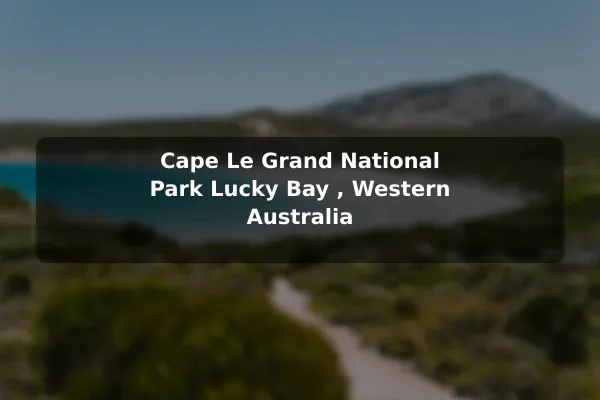
Near Esperance on Western Australia’s southern coast, Cape Le Grand shelters Lucky Bay, famed for some of the whitest, squeakiest sand in the country against startlingly turquoise water. The pull here is the surreal sight of kangaroos lounging directly on the beach, an easygoing wildlife encounter in a remote, granite-fringed setting few travellers reach.
Visitors can swim and snorkel in sheltered coves, climb Frenchman Peak for sweeping coastal views, and walk the coastal trail linking secluded beaches. Photographing the resident kangaroos at dawn, watching for whales in season, and picnicking beside the dunes make for an unhurried day in the park.
Travel tip: Bring cash or card for self-registration fees, and check tides; the firm sand allows beach driving only where signed and with a permit.
Best time to visit: Spring wildflower season and summer (September to March) for warm swimming conditions.
Ticket price: A national park entry fee applies per vehicle; prices vary, so confirm with WA Parks and Wildlife.
Bruny Island, Tasmania
Just a short ferry hop south of Hobart, Bruny Island packs dramatic scenery and a celebrated food scene into a compact, uncrowded destination. Towering sea cliffs, a slender sandy isthmus and abundant marine life make it a favourite escape, while its cheese, oysters, honey and whisky give the island a reputation well beyond its size.
Visitors can climb the steps at The Neck lookout, join a wilderness boat cruise to spot seals, dolphins and seabirds beneath the cliffs, and search for the island’s rare white wallabies. Grazing your way between local producers and walking the lighthouse trails fills a rewarding full day.
Travel tip: Reach the island by vehicle ferry and book the wilderness boat cruise ahead; allow a full day and pre-book food tastings in peak season.
Best time to visit: Late spring to autumn (November to April) for milder weather and calmer seas.
Ticket price: Island access is via a paid vehicle ferry; cruises and tours cost extra and prices vary.
Litchfield National Park, Northern Territory

An easy drive from Darwin, Litchfield National Park offers the Top End’s tropical wonders without the long journey deeper into the outback. Its cascading waterfalls, spring-fed swimming holes and towering, compass-aligned magnetic termite mounds make it a compact showcase of the region’s dramatic monsoonal landscape.
Visitors can cool off at Florence Falls, Wangi Falls and Buley Rockhole where conditions allow, wander boardwalks past the eerie termite mounds, and explore the weathered sandstone formations of the Lost City. Watching for wallabies and birdlife around the plunge pools adds to the appeal.
Travel tip: Only swim where signs confirm it is safe due to crocodile and current risks; some plunge pools close seasonally, so check conditions on arrival.
Best time to visit: Dry season from May to October when swimming holes and roads are open and safe.
Ticket price: Entry is generally free; camping fees apply and may vary by campground.
Ningaloo Reef and Coral Bay, Western Australia
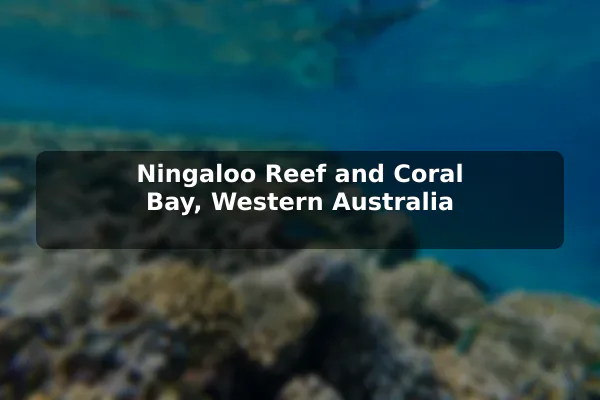
Ningaloo Reef is one of the world’s few large fringing reefs, hugging the shore so closely that its World Heritage corals sit just steps off the beach at spots like Coral Bay. This rare accessibility, paired with seasonal visits from gentle whale sharks, makes it a bucket-list marine destination without the crowds of larger reef systems.
Visitors can snorkel straight off the sand over vivid coral gardens, join guided swims alongside whale sharks or manta rays, and drift with abundant reef fish, turtles and rays. Glass-bottom boat trips and quiet beach days round out a laid-back stay on this remote coast.
Travel tip: Book whale shark or manta ray tours in advance for their short seasons and bring reef-safe sunscreen to protect the coral.
Best time to visit: Whale sharks appear roughly March to August; year-round reef snorkeling is possible in calm conditions.
Ticket price: Beach snorkeling is free; marine park zones and organised tours charge fees that vary by season and operator.
References
- Tourism Australia (Official Tourism Board) – Australia's national tourism board with authoritative destination information, itineraries, and lesser-known regional highlights useful for identifying and describing hidden gems.
- Parks Australia – Official agency managing national parks and protected areas; primary source for access rules, entry fees, permits, and location facts for many off-the-beaten-path natural destinations.
- Australian Government Department of Home Affairs – Authoritative source for visa and entry requirements (e.g. ETA/eVisitor), essential for verifying travel logistics and entry rules for international visitors.
- Smartraveller (Australian Government Travel Advisory) – Official government advisory for travel safety, health, and practical logistics relevant to remote and lesser-visited regions.
- Tourism and Events Queensland – Official state tourism organisation for verified location details, access, and seasonal information in Queensland.
