
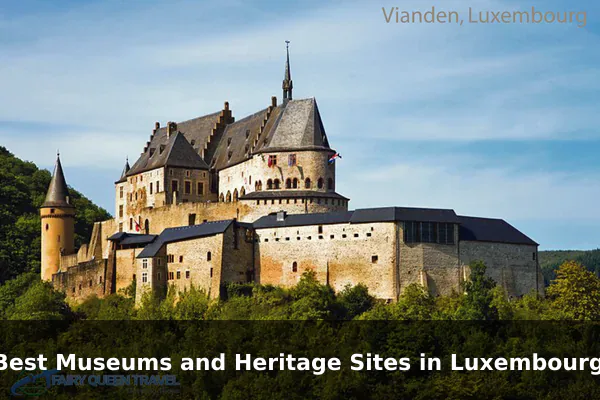
Despite its small size, Luxembourg packs an extraordinary concentration of museums and heritage sites, from UNESCO-listed fortifications carved into solid rock to world-class contemporary art galleries and storybook medieval castles. The Grand Duchy’s location at the crossroads of European history means its collections span Roman archaeology, centuries of fortress engineering, sobering World War II battlefields, and a proud industrial mining past, all within easy reach thanks to the country’s compact geography and free nationwide public transport.
This guide highlights ten standout cultural destinations spread across Luxembourg City, the Ardennes, and the former mining south, each chosen for a distinct story it tells. For every site you will find a practical visiting tip, guidance on the best time to go, and a note on likely ticket costs. Because opening hours, admission fees, and tour availability change with the season, always confirm the latest details on each venue’s official website or with the Luxembourg City Tourist Office before you set out.
Bock Casemates, Luxembourg City
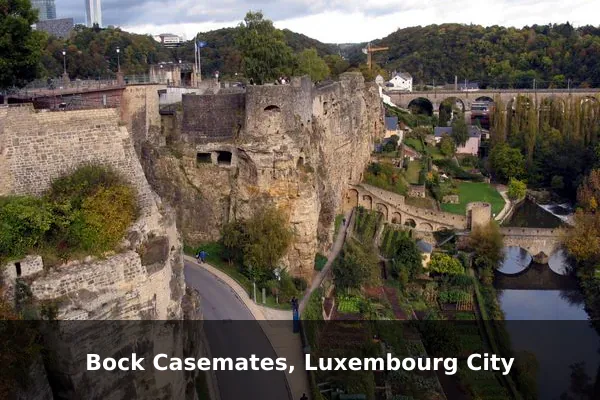
The Bock Casemates are the heart of Luxembourg’s UNESCO World Heritage status, a vast honeycomb of tunnels carved into the sandstone cliffs where the city’s legendary fortress was born in 963. Few attractions let you walk directly inside the rock that once made Luxembourg one of Europe’s most formidable strongholds, earning it the nickname “Gibraltar of the North.”
Inside, visitors can wind through gun galleries, former barracks, and slit windows that frame dramatic views over the Alzette valley and the Grund district below. Information panels trace the casemates’ role through successive sieges, and the open ledges reveal how soldiers once watched over the approaches to the old town.
Travel tip: Wear sturdy, non-slip shoes and bring a light jacket, as the stone passages are uneven, dimly lit, and cool even in summer.
Best time to visit: Open seasonally, typically spring through autumn; arrive early on a weekday morning to avoid tour-group crowds.
Ticket price: A modest entry fee applies (around €8 for adults); exact prices vary by season, so confirm with the Luxembourg City Tourist Office.
Mudam Luxembourg – Musée d'Art Moderne Grand-Duc Jean
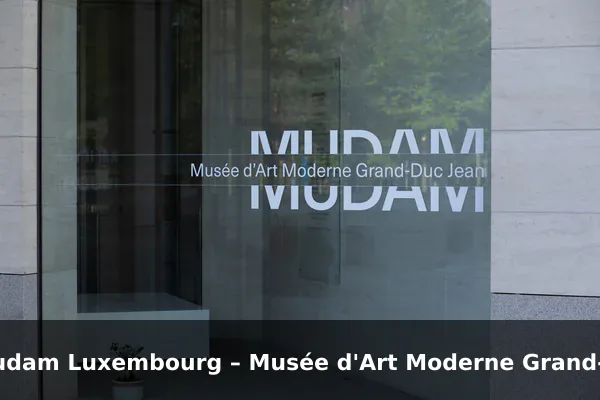
Mudam is the Grand Duchy’s flagship museum for contemporary art, housed in a luminous building of glass and warm Magny limestone designed by I. M. Pei, the architect behind the Louvre Pyramid. Set on the Kirchberg plateau atop the remains of Fort Thüngen, it pairs cutting-edge artworks with a structure that is itself a piece of design worth seeing.
Inside, visitors can explore rotating exhibitions spanning painting, sculpture, photography, design, and large-scale installations by international and Luxembourgish artists. The light-filled atrium, the café, and the surrounding sculpture-dotted grounds give the visit a relaxed rhythm beyond the galleries themselves.
Travel tip: Combine your visit with the adjacent Fort Thüngen and Dräi Eechelen museum, as both sit on the same fortress site; reach Kirchberg easily by free tram.
Best time to visit: Open year-round with one weekly closing day; check for extended evening hours and visit on a weekday for a quieter experience.
Ticket price: Admission charged for adults with reductions and free entry for under-21s; prices vary, so verify on the official Mudam website.
Musée National d'Archéologie, d'Histoire et d'Art (MNAHA)
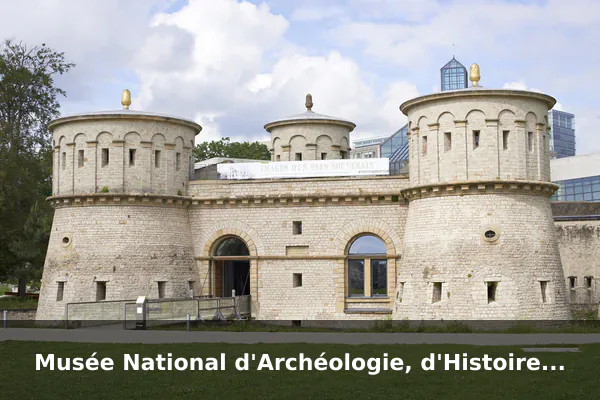
The MNAHA holds Luxembourg’s most comprehensive national collection, making it the single best place to understand the country’s long story from prehistory to the present. Tucked into the historic Fëschmaart in the old town, it gathers Roman mosaics, medieval treasures, and fine art under one roof in a building that descends through several underground levels.
Visitors can move chronologically through archaeology, history, and art galleries, pausing at standout pieces such as Gallo-Roman artefacts and locally excavated finds. Temporary exhibitions add depth on focused themes, and the layered architecture itself makes navigating the eras feel like a descent through time.
Travel tip: Allow at least two to three hours, as the multi-level galleries are extensive; lockers are available for bags.
Best time to visit: Open most of the year with one weekly closing day; late afternoons on weekdays tend to be calmest.
Ticket price: Permanent collection access is often free or low-cost with charges for temporary exhibitions; confirm current rates on the national museum site.
Lëtzebuerg City Museum
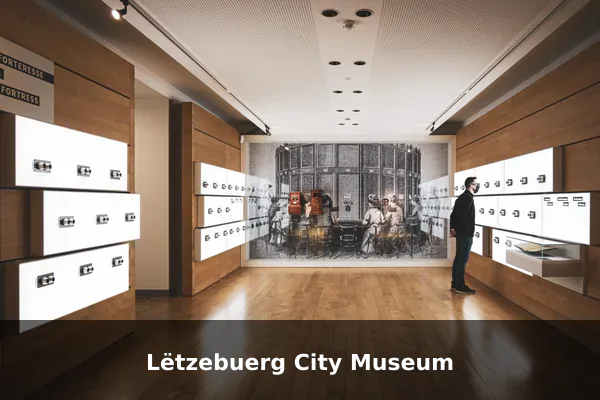
The Lëtzebuerg City Museum tells the thousand-year story of Luxembourg City through a clever blend of original artefacts, models, and multimedia displays, all set inside a cluster of restored historic townhouses. It is the ideal first stop for understanding how a remote fortress grew into a modern European capital.
Visitors can follow the city’s transformation across themed floors, study a detailed scale model of the fortress town, and examine how successive powers reshaped its ramparts and streets. The interplay between centuries-old cellars and contemporary exhibition design makes the building part of the experience.
Travel tip: Take the large glass panoramic lift between floors for unexpected views over the old town's rooftops and ramparts.
Best time to visit: Open year-round except one weekly closing day; mornings are quietest before walking-tour groups arrive.
Ticket price: A modest admission fee applies with reductions and free entry for young visitors; check the official museum website for current pricing.
Notre-Dame Cathedral, Luxembourg City
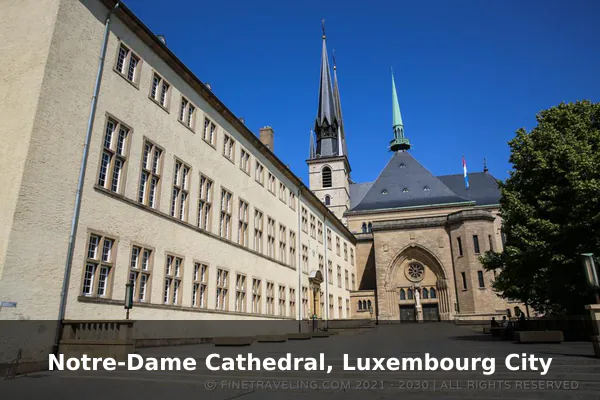
Notre-Dame Cathedral is the principal church of the Grand Duchy and a landmark of the city skyline, blending late Gothic structure with rich Renaissance detailing and distinctive black spires. As the spiritual centre of Luxembourg and the resting place of the grand ducal family, it carries both architectural and national significance.
Visitors can admire the carved galleries, stained-glass windows, and the alabaster choir before descending to the crypt, guarded by bronze lions, where members of the grand ducal dynasty are interred. During the spring Octave pilgrimage, the cathedral becomes the focus of one of the country’s most important religious traditions.
Travel tip: Dress modestly with shoulders covered and keep noise low, as this is an active place of worship; photography may be restricted during services.
Best time to visit: Open daily with limited access during Mass; the spring Octave pilgrimage period is atmospheric but very busy.
Ticket price: Entry is generally free, though donations are welcomed for upkeep.
Grand Ducal Palace, Luxembourg City
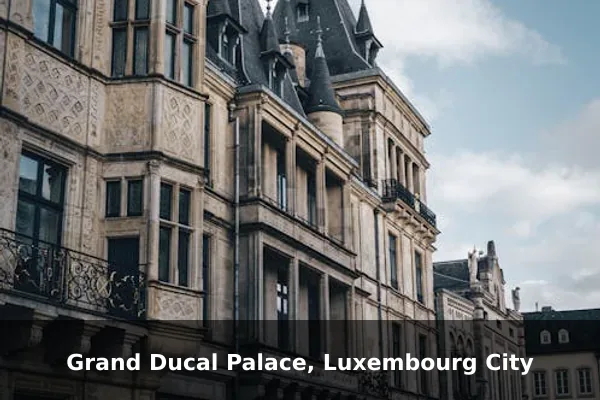
The Grand Ducal Palace is the ceremonial heart of Luxembourg City and the official town residence of the Grand Duke, making it one of the country’s most prestigious heritage buildings. Its ornate Flemish Renaissance facade dominates the old town’s narrow streets, and the rare chance to step inside during the brief summer tour season gives visitors an intimate look at a working monarchy.
Inside, guided tours lead you through richly decorated state rooms, grand reception halls, and historic furnishings while guides recount the building’s evolution from town hall to royal residence. Even outside the tour season, you can watch the smartly uniformed sentries and the ceremonial guard change at the entrance, a popular photo moment year-round.
Travel tip: Book guided-tour tickets in advance through the Luxembourg City Tourist Office, as spots are limited and sell out quickly.
Best time to visit: Interior tours typically run only during summer months; the ceremonial guard change outside can be seen year-round.
Ticket price: Guided tours carry a set fee that supports a charity; prices vary by year, so confirm before booking.
Vianden Castle, Vianden
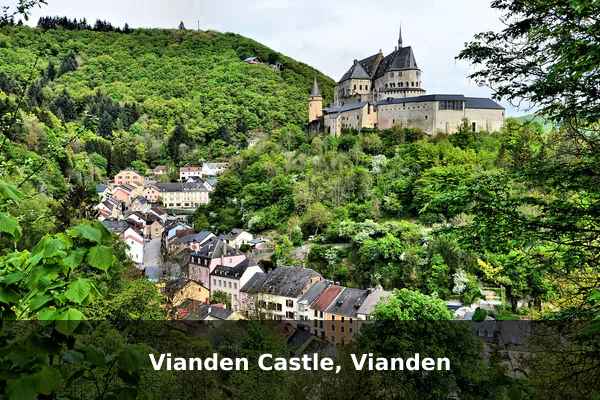
Vianden Castle ranks among Europe’s finest restored feudal fortresses, rising dramatically on a rocky spur above the Our valley in the wooded Ardennes. Its blend of Romanesque and Gothic architecture, carefully rebuilt over decades, makes it a centerpiece of Luxembourg’s medieval heritage and a magnet for travelers exploring the north.
Visitors can wander grand halls, the chapel, the armory, and panelled chambers that recreate centuries of noble life, with sweeping valley views from the ramparts. The small town below adds to the experience, with riverside cafes, the Victor Hugo museum, and trails that frame the castle from below.
Travel tip: Ride the scenic chairlift up the hillside for the classic postcard view, then walk down to the castle entrance.
Best time to visit: Open year-round; late spring and early autumn offer pleasant weather and thinner crowds than peak summer.
Ticket price: An entry fee of roughly €10 for adults applies with family and youth reductions; confirm current rates before visiting.
National Museum of Military History, Diekirch
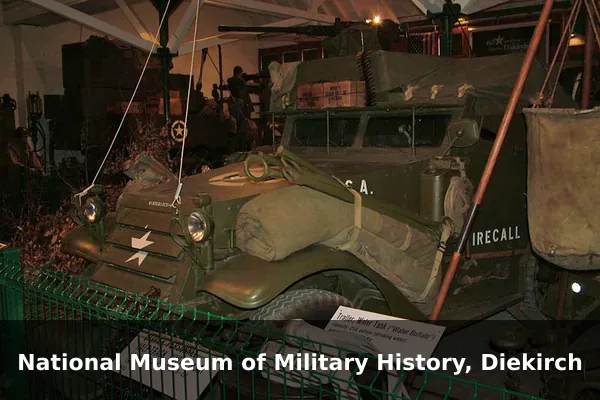
The National Museum of Military History in Diekirch offers one of the most vivid accounts of the Battle of the Bulge, the brutal winter campaign that swept through this region in late 1944. Its reputation rests on extraordinarily detailed, life-sized dioramas that place visitors directly into the snowbound landscapes and human stories of the fighting.
Beyond the dioramas, you can examine restored military vehicles, weapons, uniforms, and deeply personal artifacts from both soldiers and civilians. Thoughtful displays connect the exhibits to the surrounding Ardennes terrain, encouraging a reflective visit that pairs naturally with the area’s many wartime memorials.
Travel tip: Reach Diekirch by free national train and bus; pair the museum with nearby WWII memorials in the surrounding Ardennes towns.
Best time to visit: Open year-round; allow a half-day, and visit on weekdays for a more reflective, less crowded experience.
Ticket price: A moderate admission fee applies with reductions for students and children; check the museum's official information for exact prices.
Echternach Basilica and Abbey, Echternach
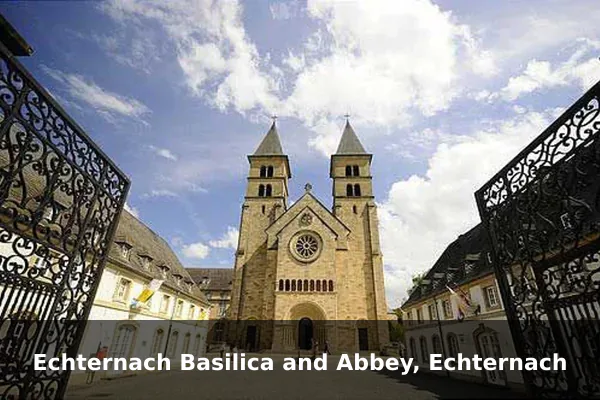
Echternach is Luxembourg’s oldest town, and its Benedictine abbey and basilica anchor a remarkable layer of religious and cultural history dating back to the seventh century. The site is best known for the UNESCO-listed Hopping Procession, a centuries-old dancing pilgrimage that draws participants and onlookers from across the region.
Inside the basilica, visitors can admire its restored interior and descend to the crypt holding the tomb of Saint Willibrord, while the abbey museum traces the town’s manuscript and monastic heritage. The surrounding old town invites a relaxed stroll past historic squares, and summer adds the appeal of the town’s renowned classical music festival.
Travel tip: Time a visit for the Whit Tuesday Hopping Procession if you can, but expect large crowds and plan transport and parking ahead.
Best time to visit: The basilica is open daily; the procession falls on Whit Tuesday, while summer brings the town's classical music festival.
Ticket price: Basilica entry is generally free; the abbey museum and crypt may charge a small fee, so confirm locally.
National Mining Museum, Rumelange
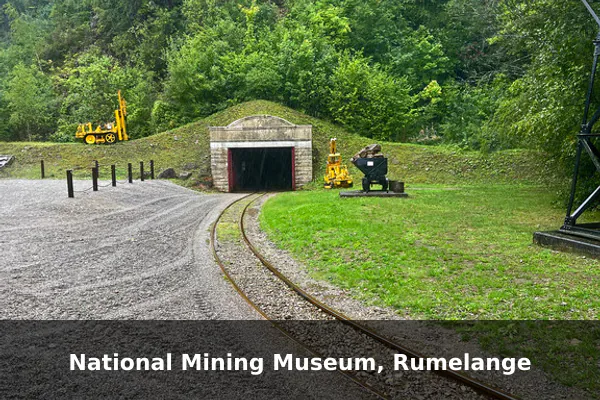
The National Mining Museum in Rumelange brings Luxembourg’s industrial past to life in the southern Minett region, where iron ore once powered the nation’s economy. Set within a genuine former mine, it offers a rare, immersive way to understand the harsh working conditions that shaped generations of miners.
The highlight is an underground train that carries visitors deep into the tunnels, where guides demonstrate mining tools, techniques, and the evolution of the work over time. Exhibits of machinery and personal accounts add context, making the cool, dimly lit galleries a memorable journey into the country’s heritage.
Travel tip: Bring a warm layer for the cool tunnels and wear closed shoes; the visit involves a guided underground tour, so check schedules first.
Best time to visit: Open seasonally, mainly spring to autumn; book a guided slot in advance, especially on weekends.
Ticket price: A moderate fee covers the guided mine tour with reductions for children; prices vary, so verify before your visit.
Official references
- Visit Luxembourg – Official National Tourism Board – Official national tourism office of Luxembourg; authoritative for attractions, heritage sites, museums, opening hours and visitor practical information.
- Luxembourg City Tourist Office (LCTO) – Official tourist office for Luxembourg City; primary source for city museums, heritage walks (e.g. Bock Casemates) and current visitor details.
- Mudam Luxembourg – Musée d'Art Moderne Grand-Duc Jean – Official museum site for Luxembourg's national contemporary art museum; authoritative for opening hours, admission fees and exhibitions.
- Musée National d'Archéologie, d'Histoire et d'Art (MNAHA) – Official site of Luxembourg's national museum of archaeology, history and art; primary source for collections, hours and pricing.
- Lëtzebuerg City Museum – Official museum dedicated to the history of Luxembourg City; reliable for visitor information and exhibition details.
